
No products in the cart.
🇺🇸Made in USABucks County, PA
🛡️Lifetime WarrantyAnti-warp guaranteed
📦Free Shipping5-7 week lead time
What's In The Box
✓
Your custom barn door
Fully assembled, finished, and ready to hang
✓
Sliding track hardware
Premium black steel rail, cut to size
✓
Roller hangers
Smooth, quiet nylon wheels
✓
Floor guide
Keeps the door aligned and stable
✓
Door stops + anti-jump discs
Safety and convenience included
✓
All mounting fasteners
Bolts, spacers, and screws, everything
Prefer to talk before ordering?
Many customers at this price point want a conversation first. We get it.
Painted Finishes
If you are looking for a painted finish, we professionally spray all of your doors to any desired paint code for a flawless finish. We only use top-shelf Sherwin Williams Emerald acrylic latex, which is durable and easy to clean. Just let us know what color you’re interested in!
Stained Finishes
Below we offer the chance to choose your preferred stain. We primarily use Varathane, renowned for its durability and rich color, and accommodate Minwax on request. For lasting protection we apply three coats of satin-finish polyurethane that enhances the natural beauty of the wood.
Fitzgerald Mid Century Sliding Door
What’s Included In Our Door Packages?
- Fully assembled, handcrafted doors built to fit your opening perfectly
- Custom stained or professionally painted to your exact color code
- Matching header board included for easy track installation
- Premium, top-quality track hardware included
- Freight shipping or local delivery available
- Dedicated customer support via call, text, or video
- Lifetime anti-warping guarantee
Fast response. No pressure. We’ll guide you.
Starting at: $2,399.00
Estimated Delivery :
7-9 Weeks
Fitzgerald Mid Century Sliding Door
Starting at: $2,399.00
97%
Said quality exceeded expectations*
94%
Installed in under 2 hours*
99%
Would recommend to a friend*
*Based on post-purchase customer survey
How We Compare
See why customers choose Cornerstone over the alternatives
| Cornerstone | Big Box Stores | Local Carpenter | |
|---|---|---|---|
| Material | Solid kiln-dried wood | Hollow core / MDF | Solid wood |
| Custom sizing | To the fraction of an inch | Standard sizes only | Custom available |
| Hardware included | Yes, free | Sold separately ($80-150) | Sometimes |
| Finish quality | Professional spray booth | Pre-finished / DIY | Varies |
| Anti-warp warranty | Lifetime | 1 year | None typically |
| Price range | $2,399+ | $300-800 | $3,500-6,000+ |
| Lead time | 2-3 weeks | Ships immediately | 6-12 weeks |
| Support | Call, text, or video | Email only | In-person |
Customer Reviews
★★★★★ 4.9 out of 5 (3 reviews)
★★★★★
Absolutely stunning door. The craftsmanship is incredible — you can feel the weight and quality the moment it arrives. Installed it in our master bedroom and it completely transformed the space.
Sarah M.Austin, TX✓ Verified
★★★★★
Worth every penny. We were nervous ordering a custom door online but the team walked us through measuring and the door fit perfectly. Hardware included was a huge bonus.
James K.Nashville, TN✓ Verified
★★★★☆
Beautiful door, great quality wood. Delivery took about 3 weeks which was within the estimate. Only wish they had more stain color samples available to ship.
Maria L.Denver, CO✓ Verified
Frequently Asked Questions
What if I measure wrong?+
No stress — our team reviews every order before production. We'll call you to confirm dimensions and can walk you through measuring over video chat for free.
What's the return policy?+
We offer a 30-day satisfaction guarantee. If the door doesn't meet your expectations, we'll work with you on a return or replacement.
Is assembly required?+
Your door arrives fully assembled and pre-drilled. The included hardware kit has everything you need — most homeowners install it in under 2 hours.
How does shipping work at this size?+
We use freight shipping with liftgate delivery to your door. You'll get tracking and a delivery window so you can plan ahead.
Slats, Discs, and Negative Space
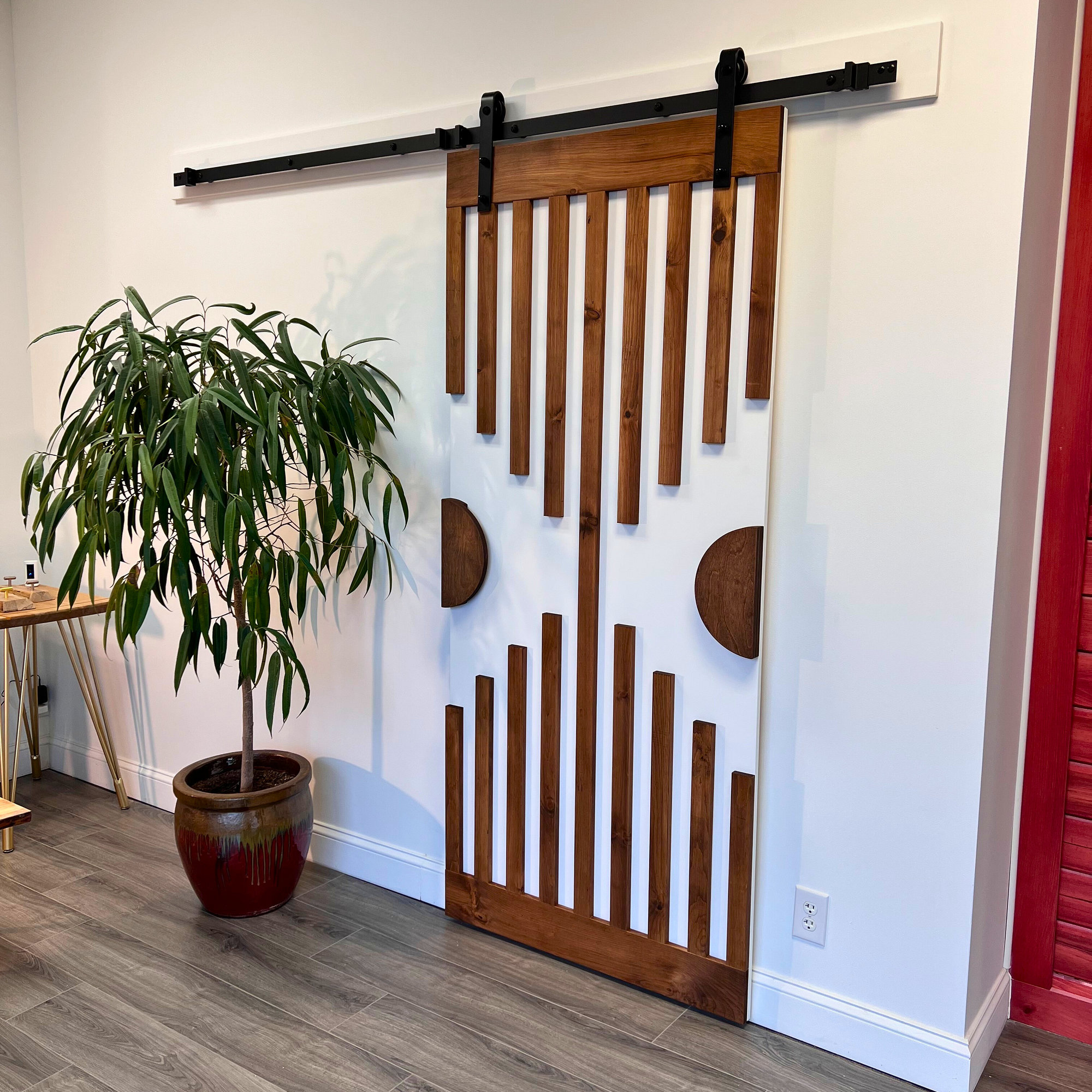
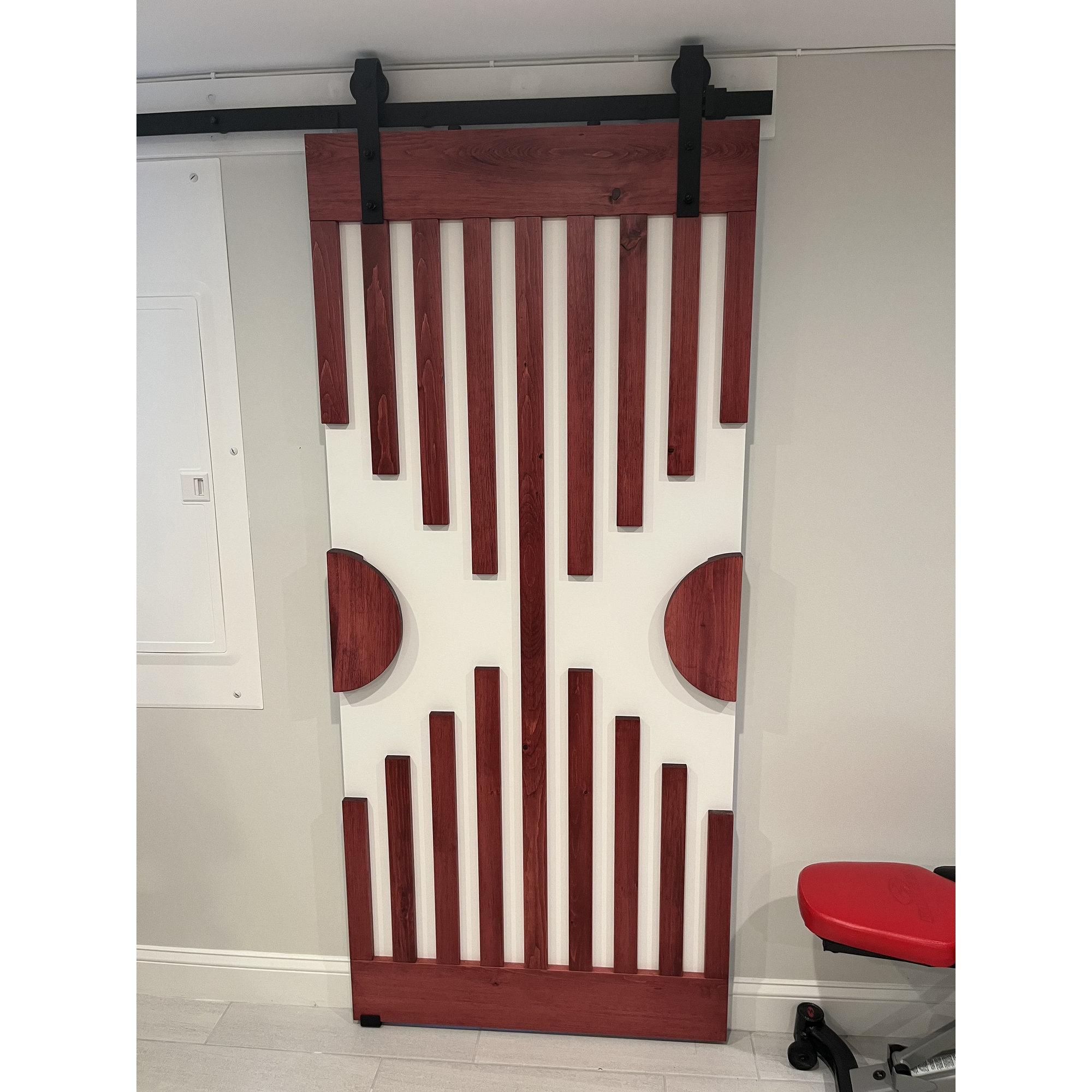
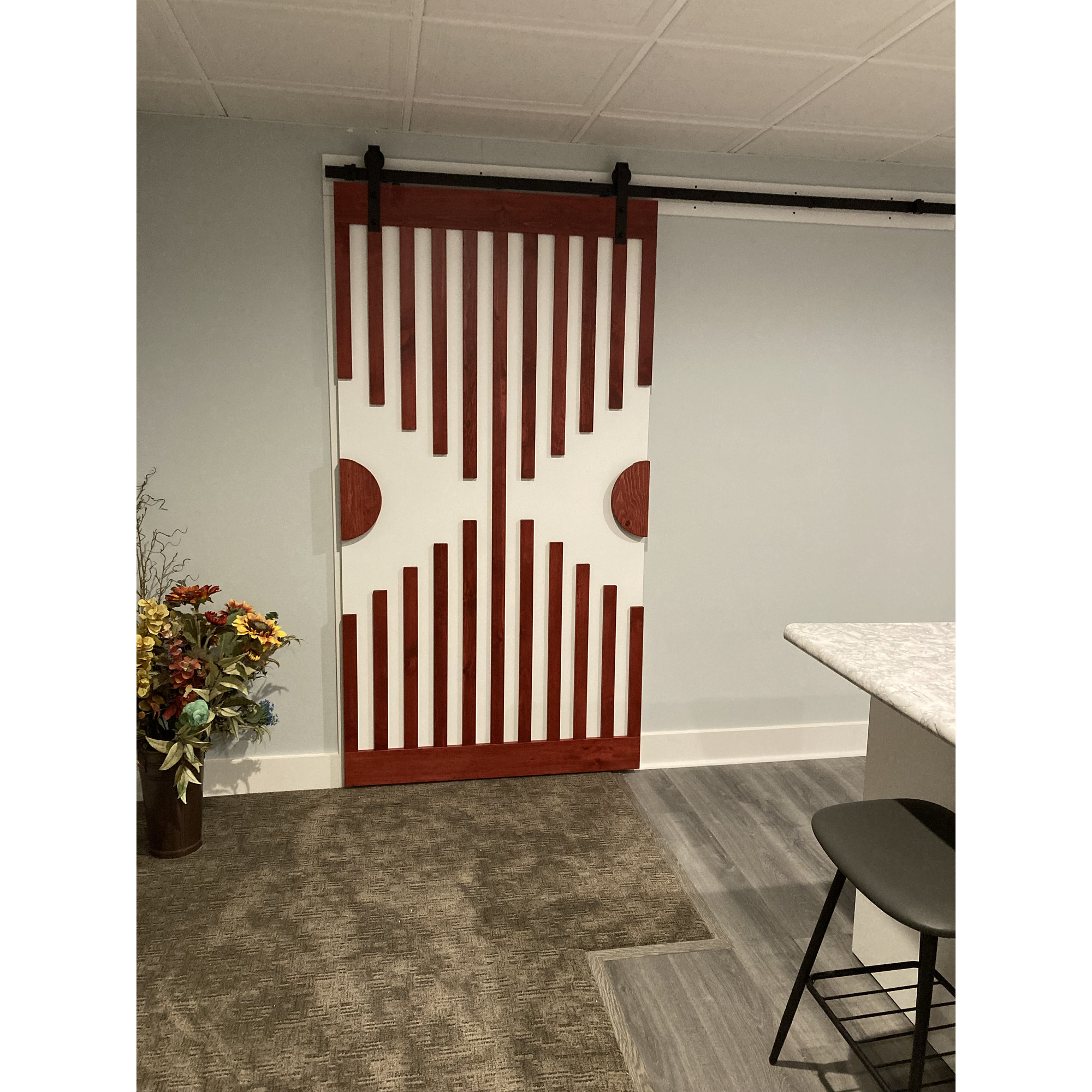
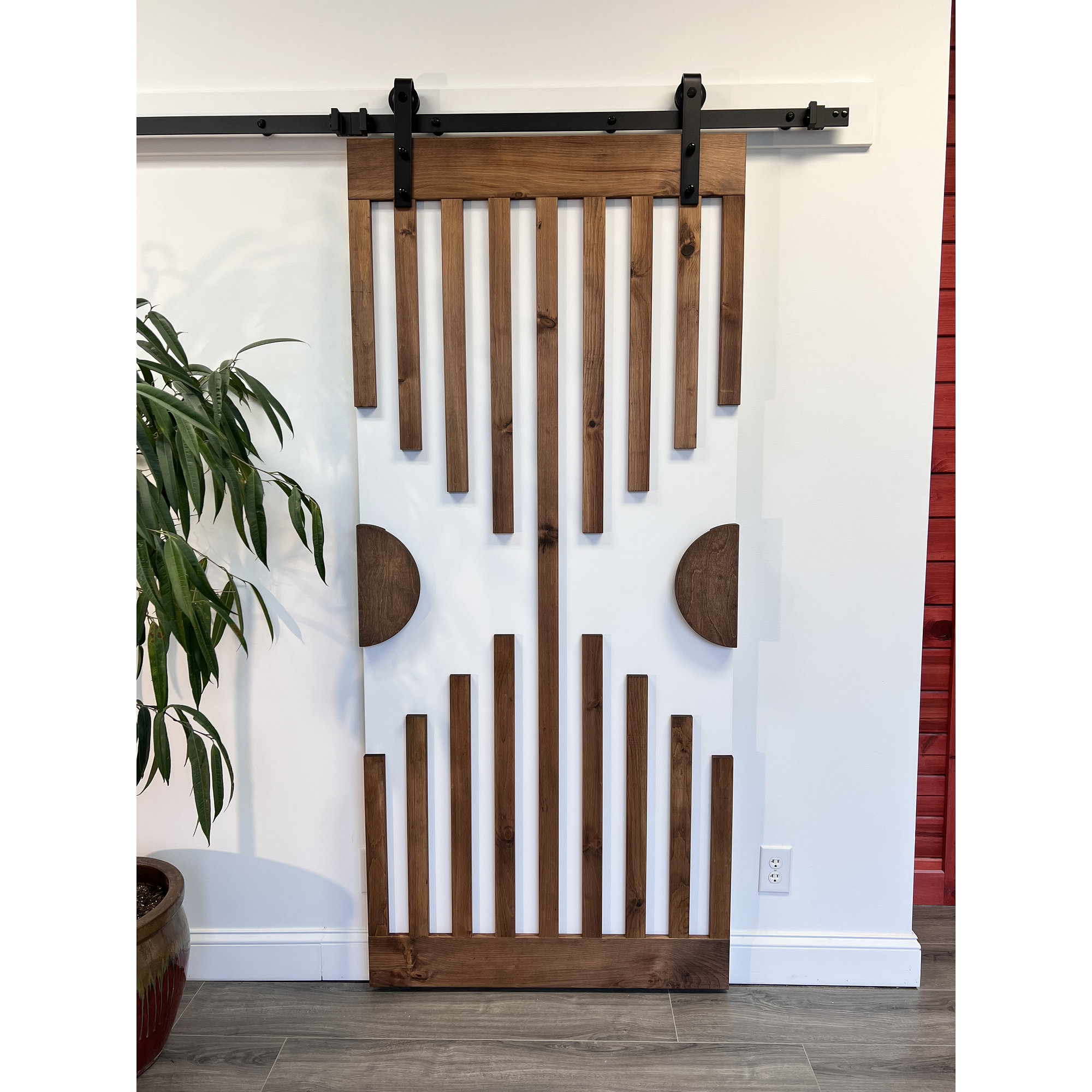
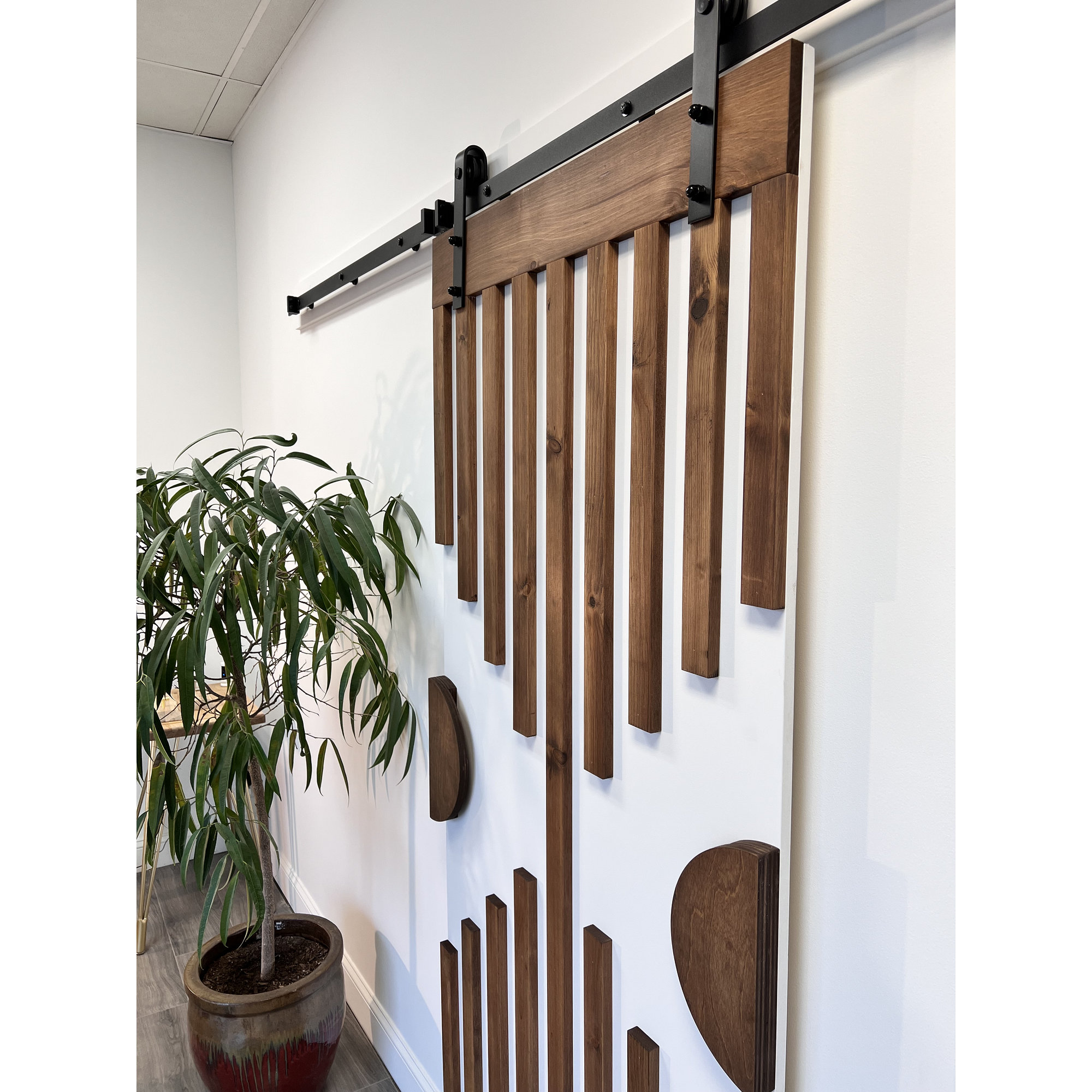
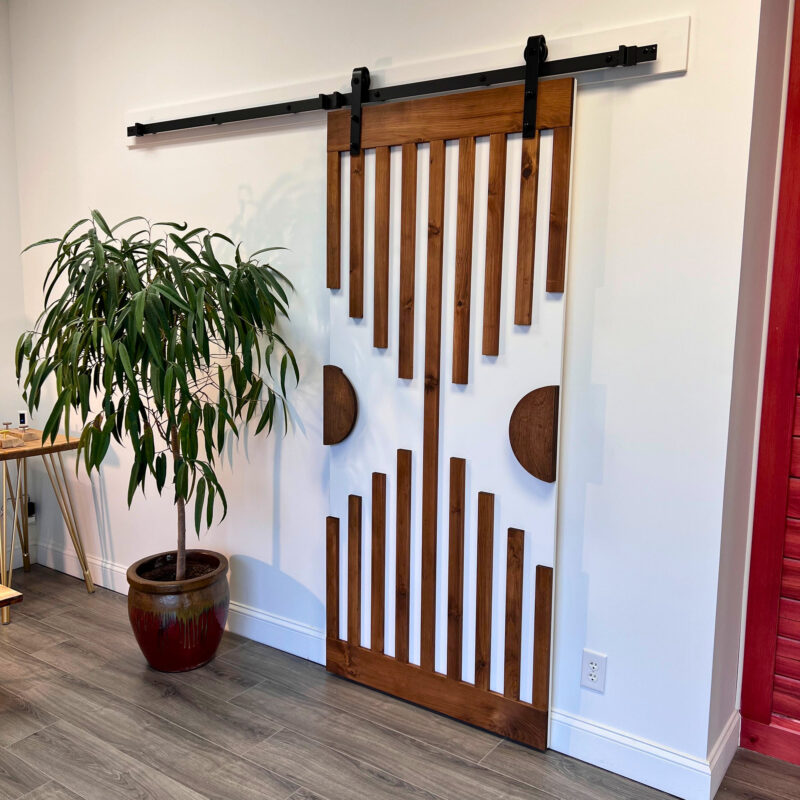
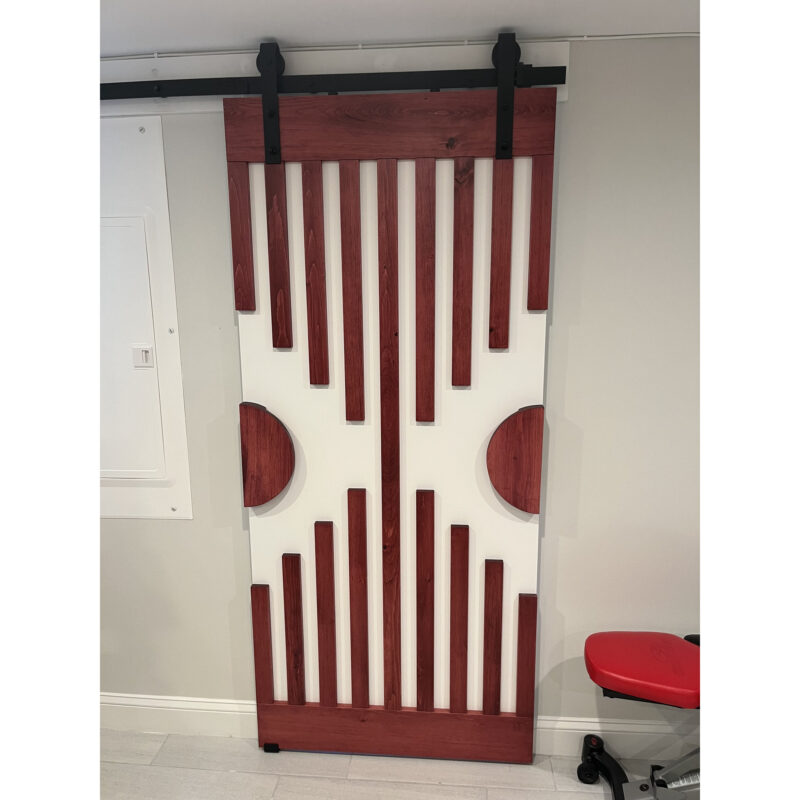
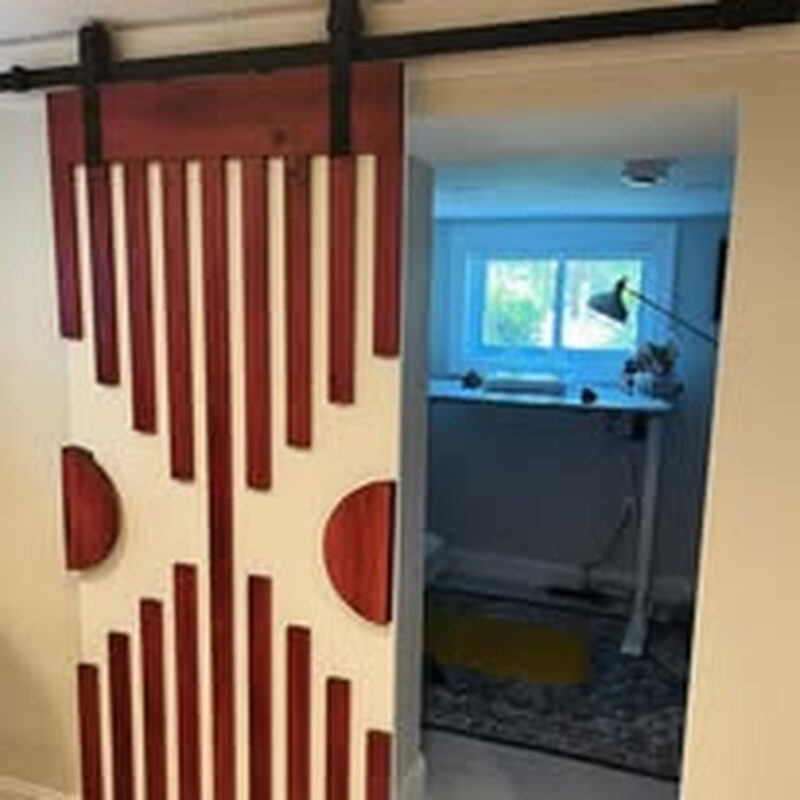
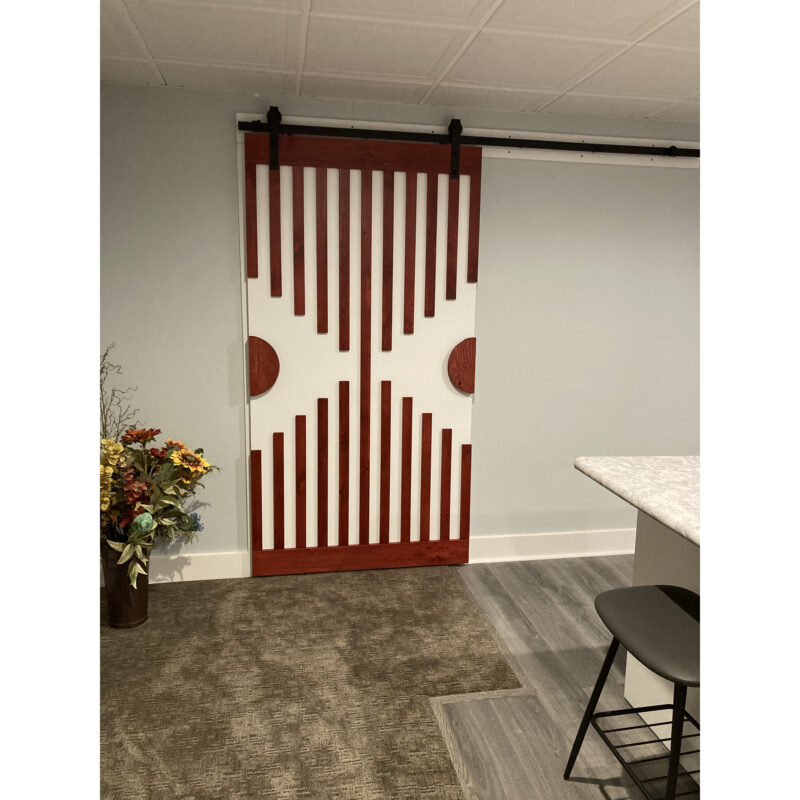
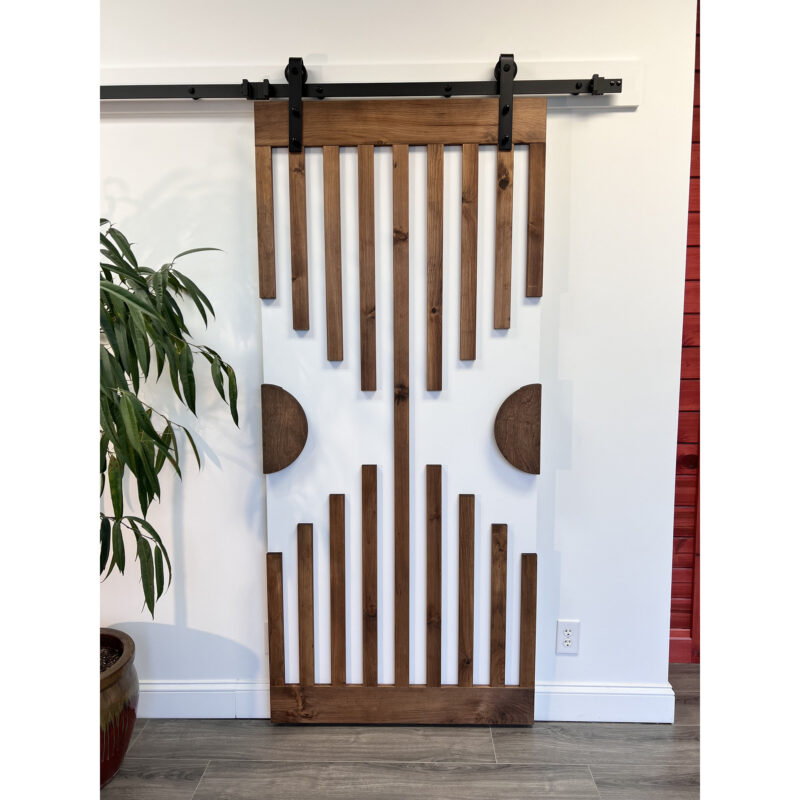
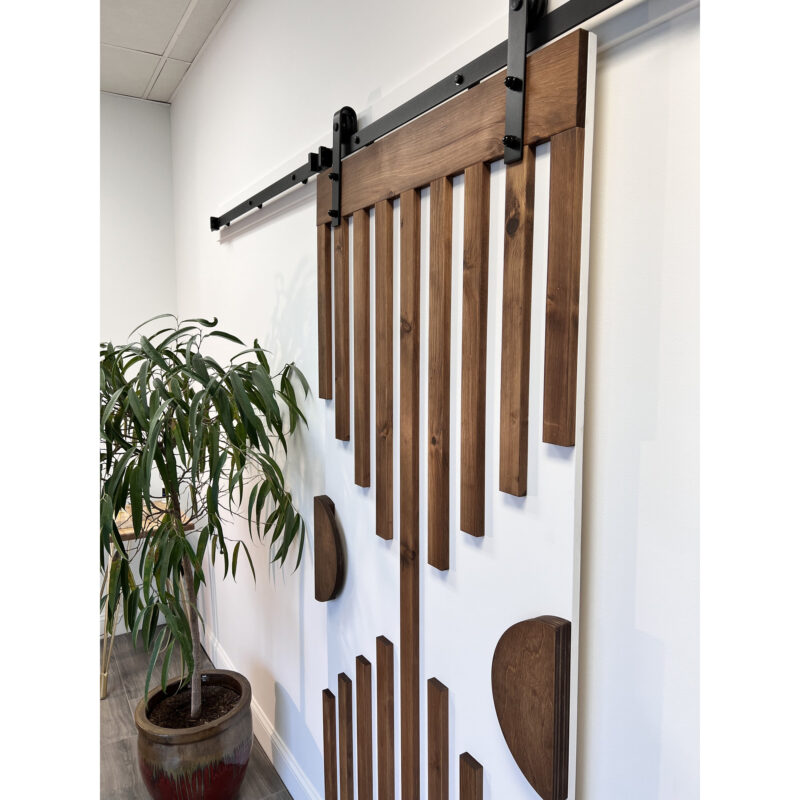
The Fitzgerald sets stained vertical slats of varying heights against a painted field, then interrupts them with two solid discs placed slightly off center. It is a composition, not a pattern. The rhythm never repeats, and that is deliberate.
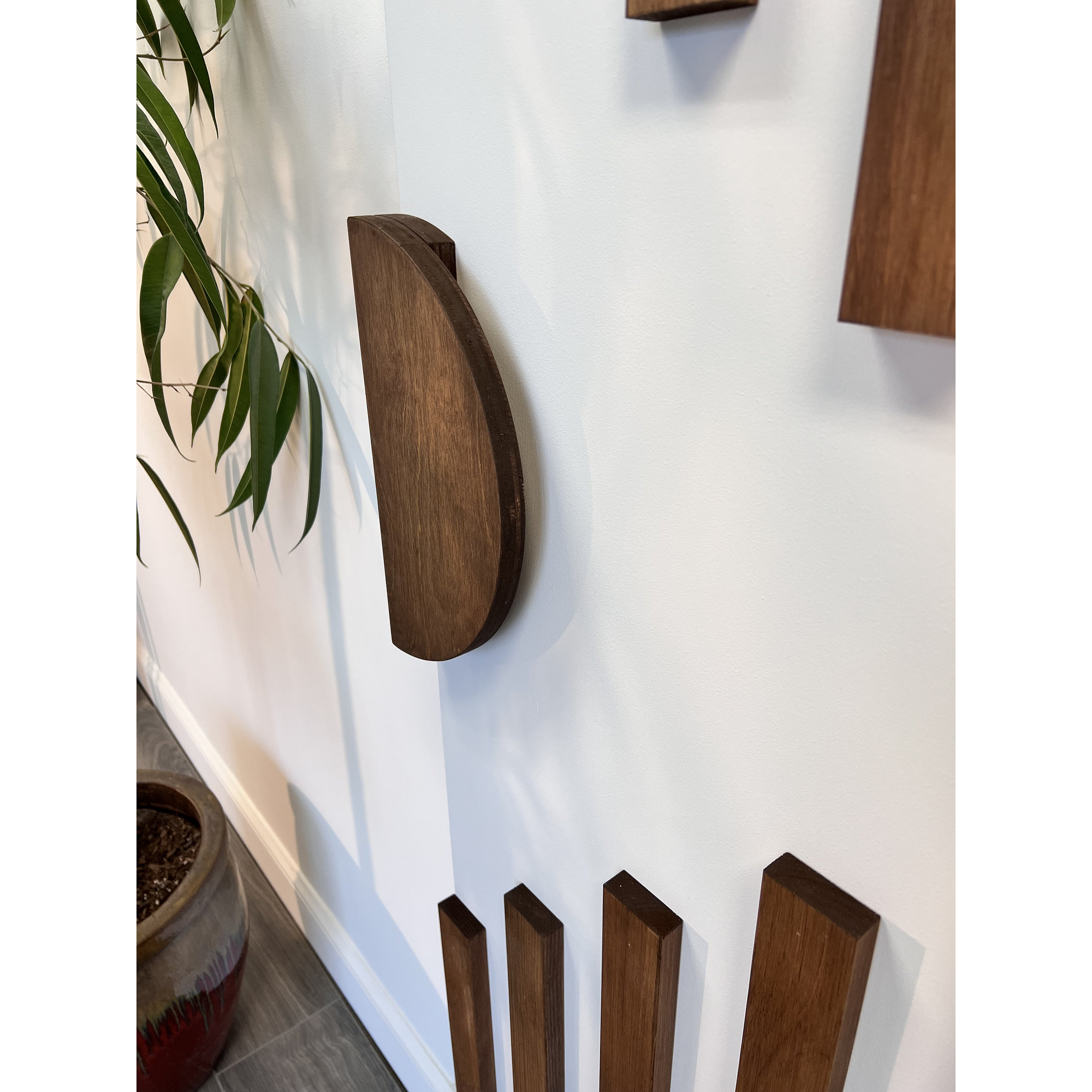
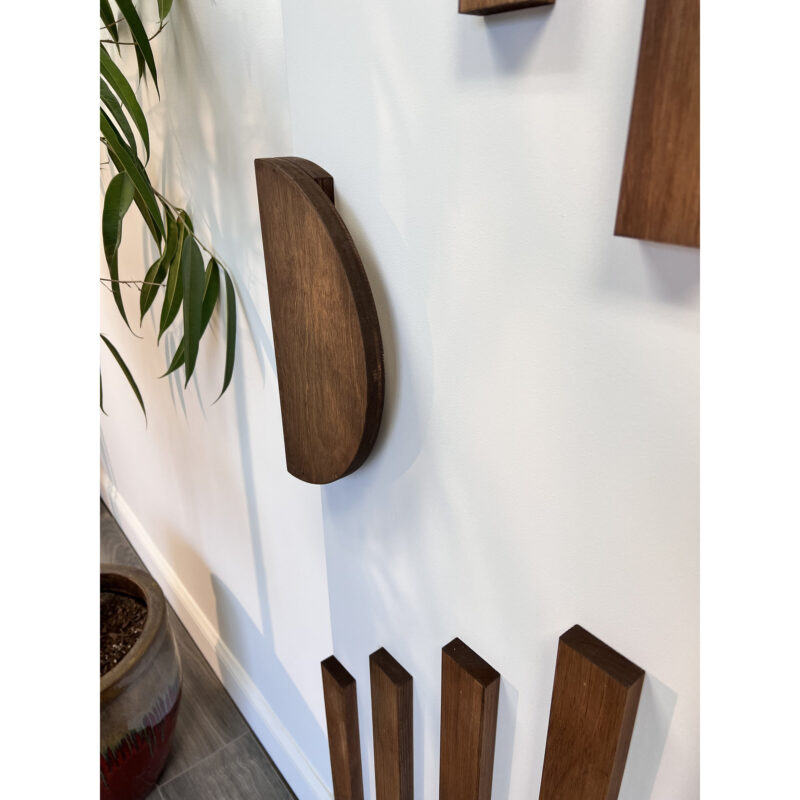
The reference is midcentury cabinet work, where designers used applied wood and simple geometry to break up a flat face without carving into it. Here the slats sit proud of the surface, so each one throws its own shadow and the painted ground between them stays bright.
Hung as a pair the two panels do not mirror. They continue, which means the composition reads across the full opening rather than folding back on itself at the seam.
Design Details
Slats of Varying Height
No two runs are the same length. The composition is arranged by eye so nothing about it feels mechanical or repeated.
Two Off Center Discs
Solid rounds break the vertical rhythm at unequal heights. Cover them and the door loses its personality immediately.
Wood on Paint
Stained applied elements against a painted ground. The contrast does the work that carving would do on an older door.
Composition Across the Pair
On a double opening the design continues from panel to panel instead of mirroring, so the seam reads as a pause rather than an axis.
Applied Work Needs a Stable Ground
Every slat and disc on this door is a glue line, and every glue line pulls on the panel behind it. If that panel is a hollow blank it will telegraph, and if it is MDF it will swell. Ours is solid wood, built in Pipersville, Pennsylvania, dried and stabilized before a single slat goes down, and warrantied against warping for as long as it is yours.
Where This One Works Best
- Midcentury living rooms
- Bedroom entries
- Home offices
- Den and study doors
- Media rooms
- Stair landings
- Closet openings
- Guest suites
- Room dividers
Made in the USA. Handbuilt in Pennsylvania for the opening you measured, covered by a lifetime warranty, and delivered free.
Product Specifications
| Material | Solid kiln-dried wood (pine standard, oak and alder available) |
|---|---|
| Door Thickness | 1.5" (standard) |
| Weight | Approximately 60 to 90 lbs depending on size |
| Width Range | 20" to 48" (custom to your measurements) |
| Height Range | 72" to 100" (custom to your measurements) |
| Finish Options | Multiple wood stain colors to choose from, any Sherwin-Williams paint code, or custom |
| Hardware | Premium black steel track, rollers, floor guide and stops, all included |
| Track Style | Top-mount flat track with quiet nylon rollers |
| Door Styles | Single door or double doors, selected in the configurator above |
| Assembly | Fully assembled, arrives ready to hang |
| Warranty | Lifetime anti-warp guarantee |
Ranges above are the limits for this specific door and match the configurator on this page. Every door is built to the opening you measure. If your size falls outside these ranges, get in touch and we will tell you what is possible.
How to Measure Your Opening
A few quick measurements and we build your door to fit perfectly.
1
Measure the Width
Measure across the opening with the trim included. If there is no trim, measure just the width of the opening itself.
2
Measure the Height
Measure the total height of the opening including the trim. If there is no trim, measure just the height of the opening.
3
Leave Room for Hardware
Allow at least 6″ of clearance above the opening (or above the trim) for the track hardware. Bypass doors need a minimum of 9″.
4
We Handle the Coverage
No trim? We add 4″ to the width (2″ each side) and 1″ to the height for proper coverage. With trim, we build the door to extend slightly past it.
| Wood Stain Or Paint | Aged Barrel, American Walnut, Barn Red, Black Cherry, Briarsmoke, Carbon Gray, Carrington, Classic Gray, Dark Walnut, Early American, Ebony, Flagstone, Golden Oak, Gunstock, Kona, Light Walnut, Provincial, Red Mahogany, Sunbleached, Vintage Aqua, Weathered Gray, Worn Navy, Custom Paint |
|---|
Related Products
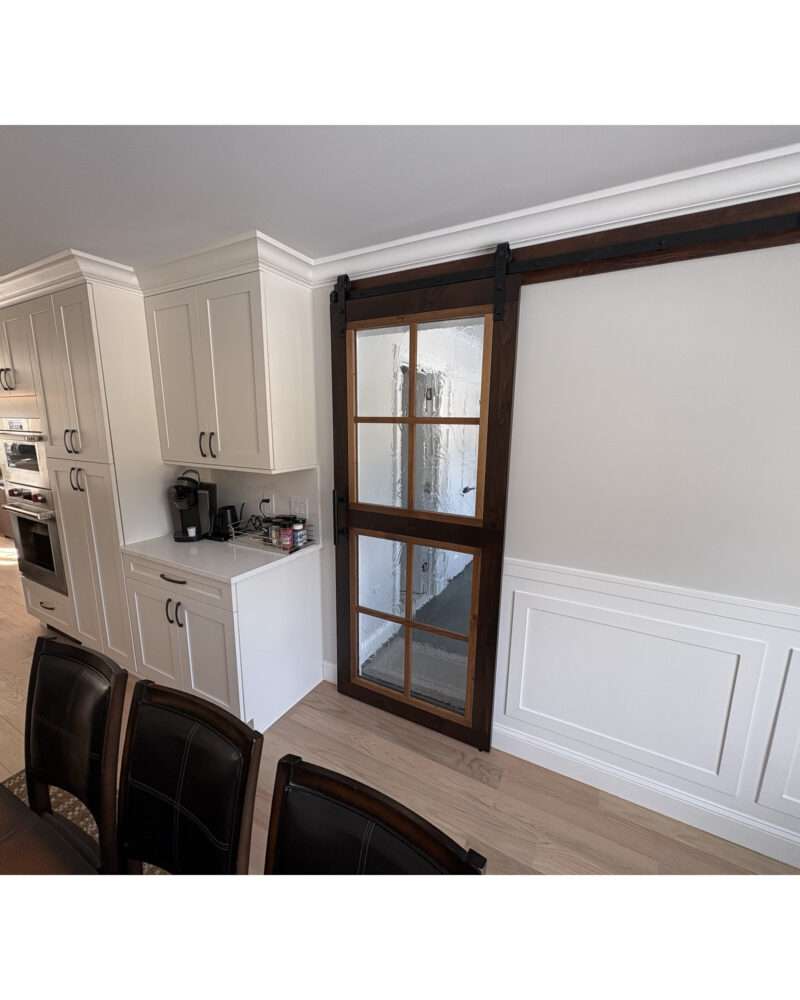
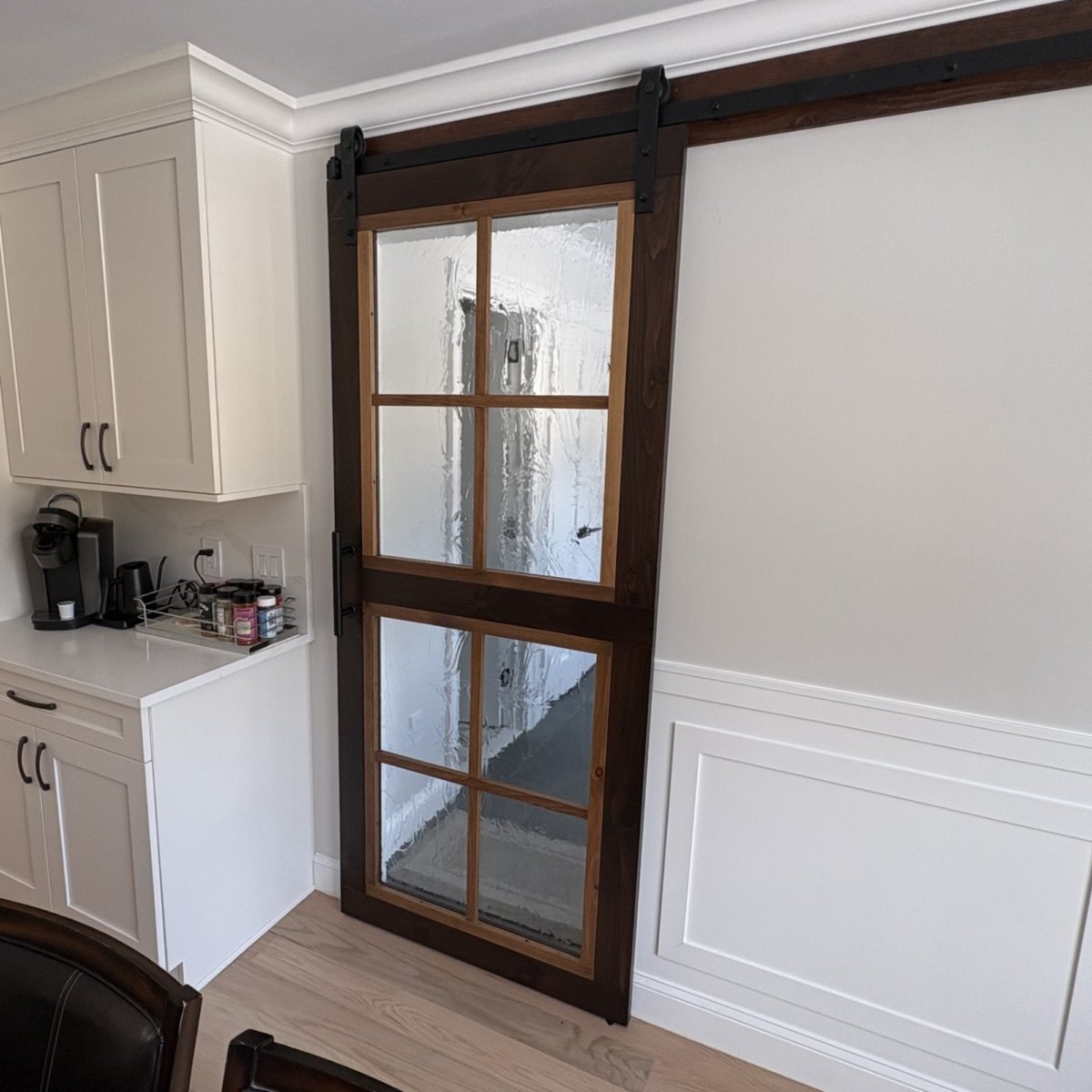
Divided French Sliding Door
What’s Included In Our Door Packages?
- Fully assembled, handcrafted doors built to fit your opening perfectly
- Custom stained or professionally painted to your exact color code
- Matching header board included for easy track installation
- Premium, top-quality track hardware included
- Freight shipping or local delivery available
- Dedicated customer support via call, text, or video
- Lifetime anti-warping guarantee
GET HELP MEASURING OR GET A QUOTE
Fast response. No pressure. We’ll guide you.
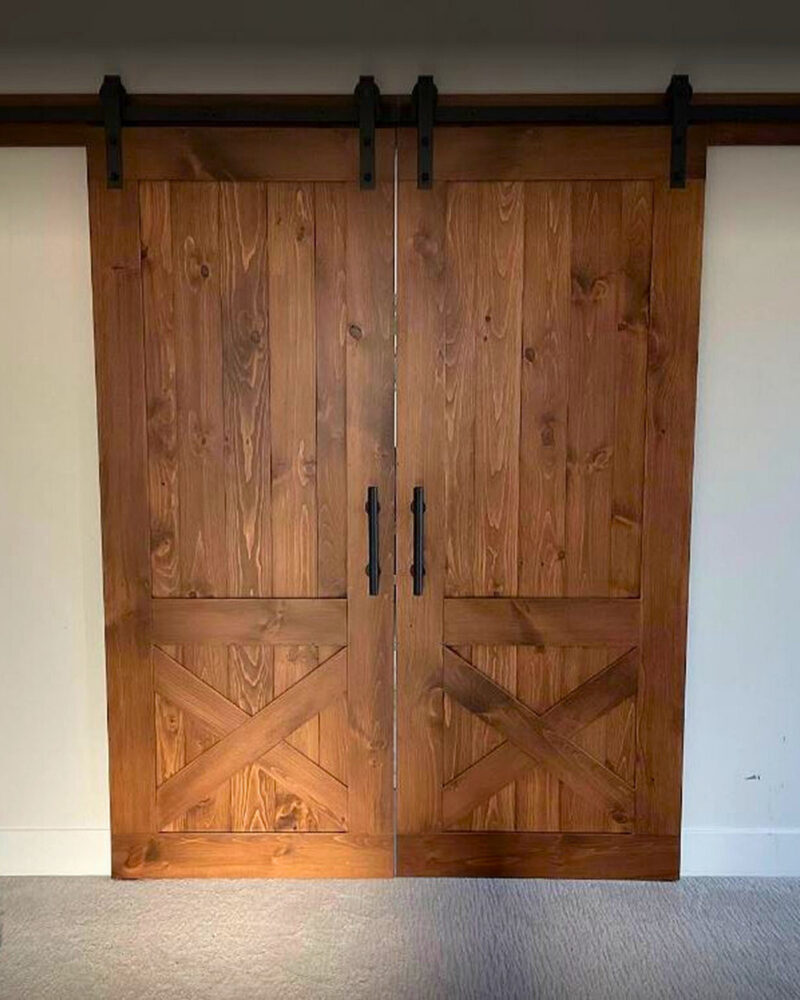
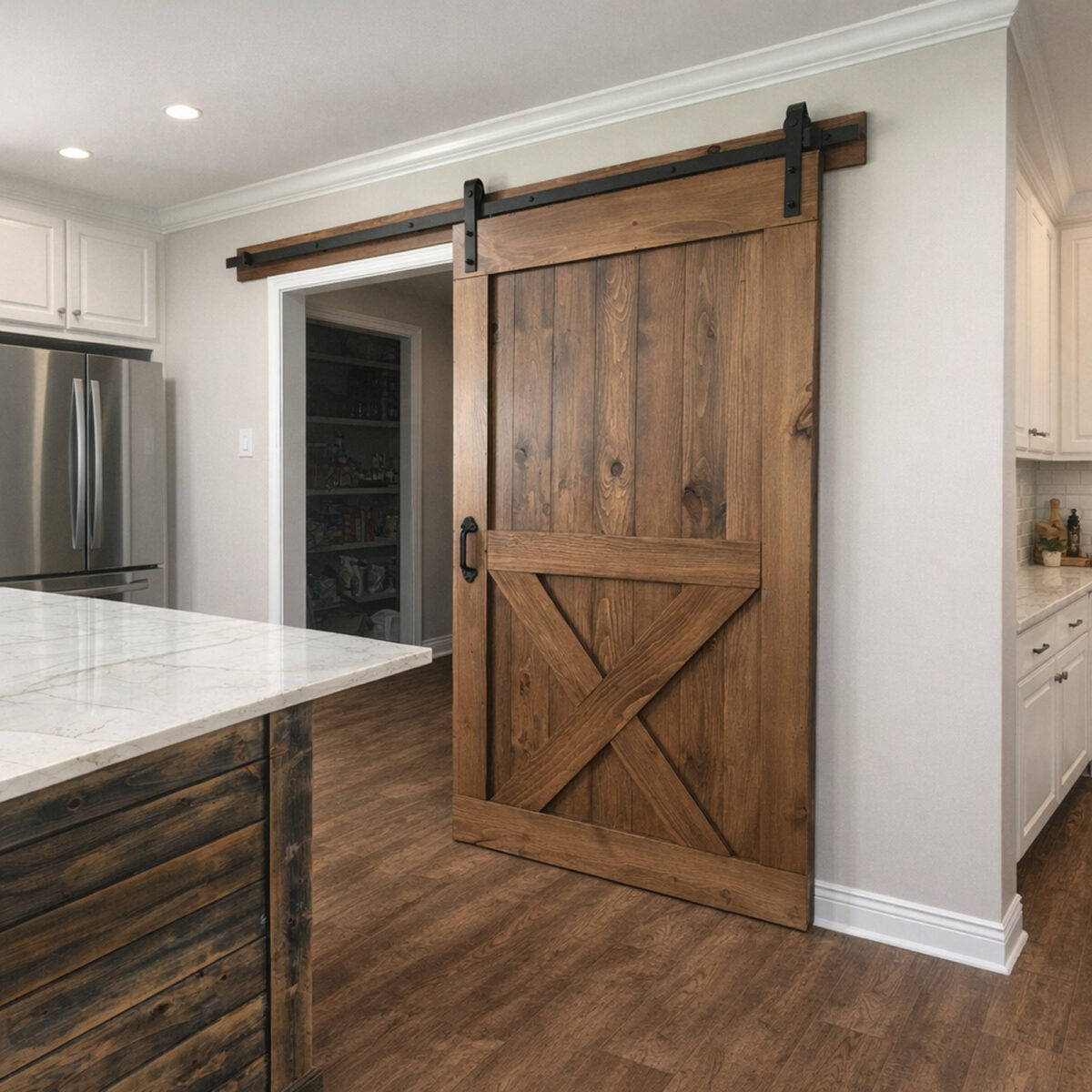
Half “X” Brace Solid Wood Door
What’s Included In Our Door Packages?
- Fully assembled, handcrafted doors built to fit your opening perfectly
- Custom stained or professionally painted to your exact color code
- Matching header board included for easy track installation
- Premium, top-quality track hardware included
- Freight shipping or local delivery available
- Dedicated customer support via call, text, or video
- Lifetime anti-warping guarantee
Fast response. No pressure. We’ll guide you.
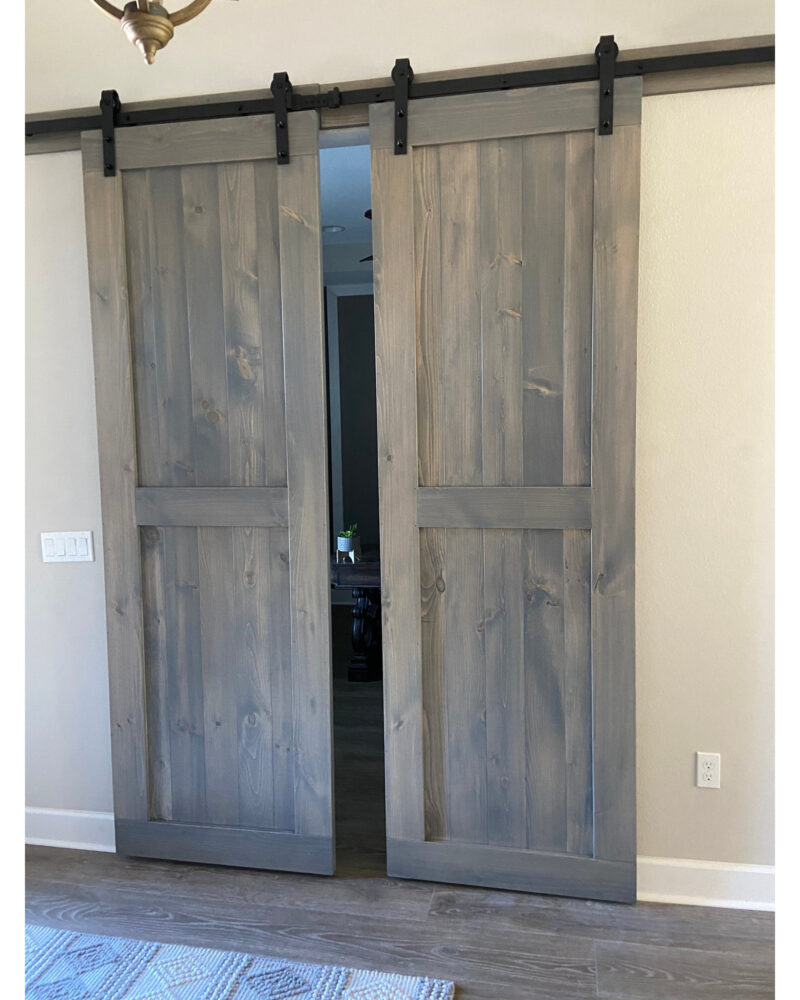
Classic Shaker Solid Wood Door
What’s Included In Our Door Packages?
- Fully assembled, handcrafted doors built to fit your opening perfectly
- Custom stained or professionally painted to your exact color code
- Matching header board included for easy track installation
- Premium, top-quality track hardware included
- Freight shipping or local delivery available
- Dedicated customer support via call, text, or video
- Lifetime anti-warping guarantee
Fast response. No pressure. We’ll guide you.
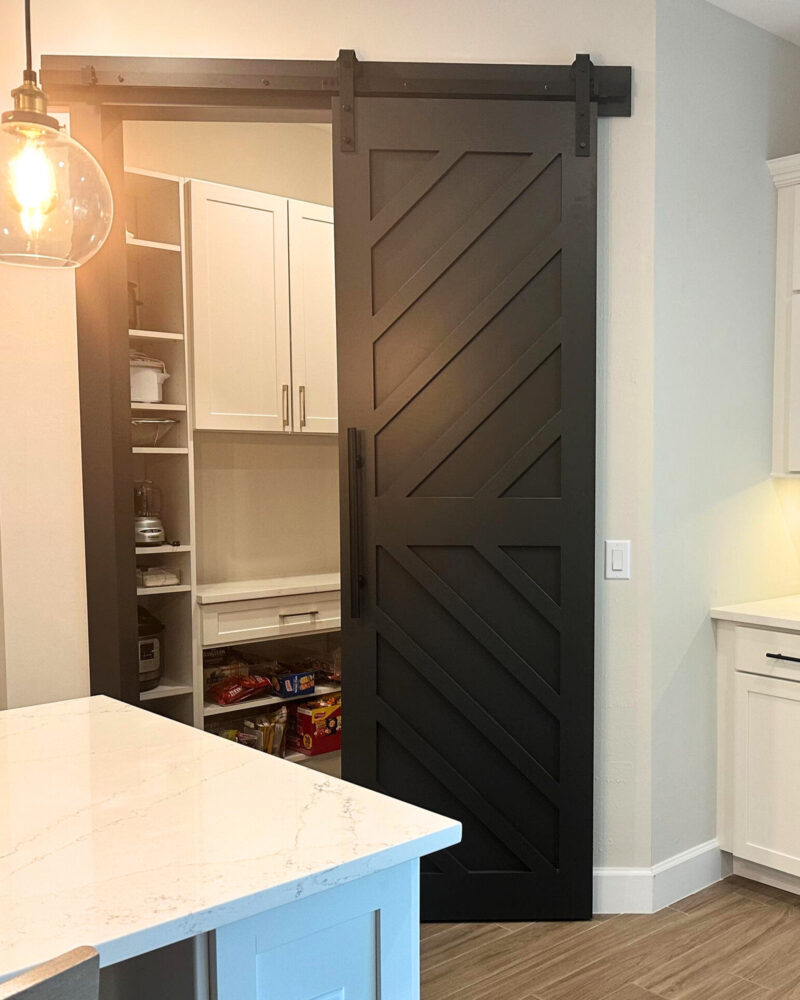
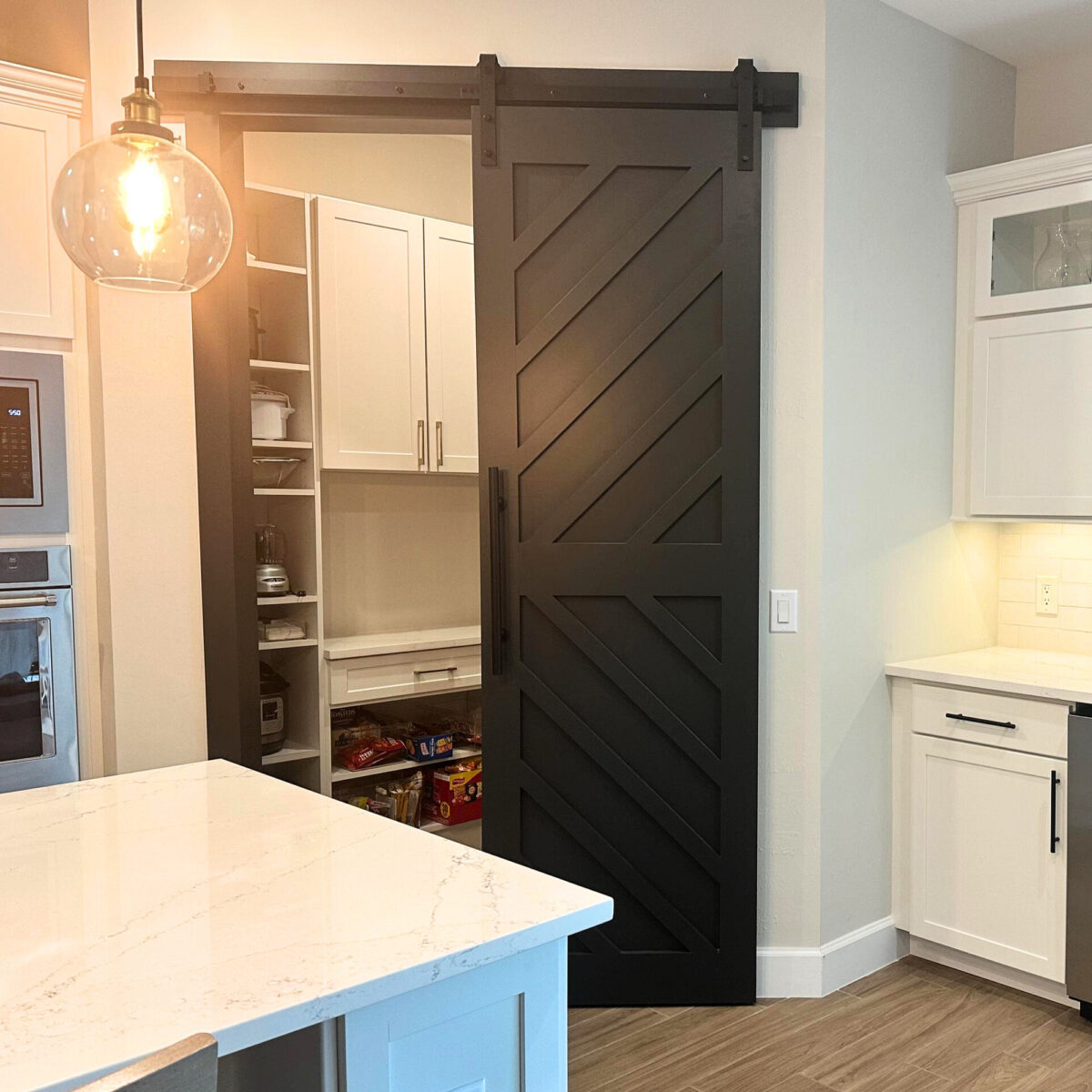
Chevron Solid Wood Sliding Door
What’s Included In Our Door Packages?
- Fully assembled, handcrafted doors built to fit your opening perfectly
- Custom stained or professionally painted to your exact color code
- Matching header board included for easy track installation
- Premium, top-quality track hardware included
- Freight shipping or local delivery available
- Dedicated customer support via call, text, or video
- Lifetime anti-warping guarantee
Fast response. No pressure. We’ll guide you.
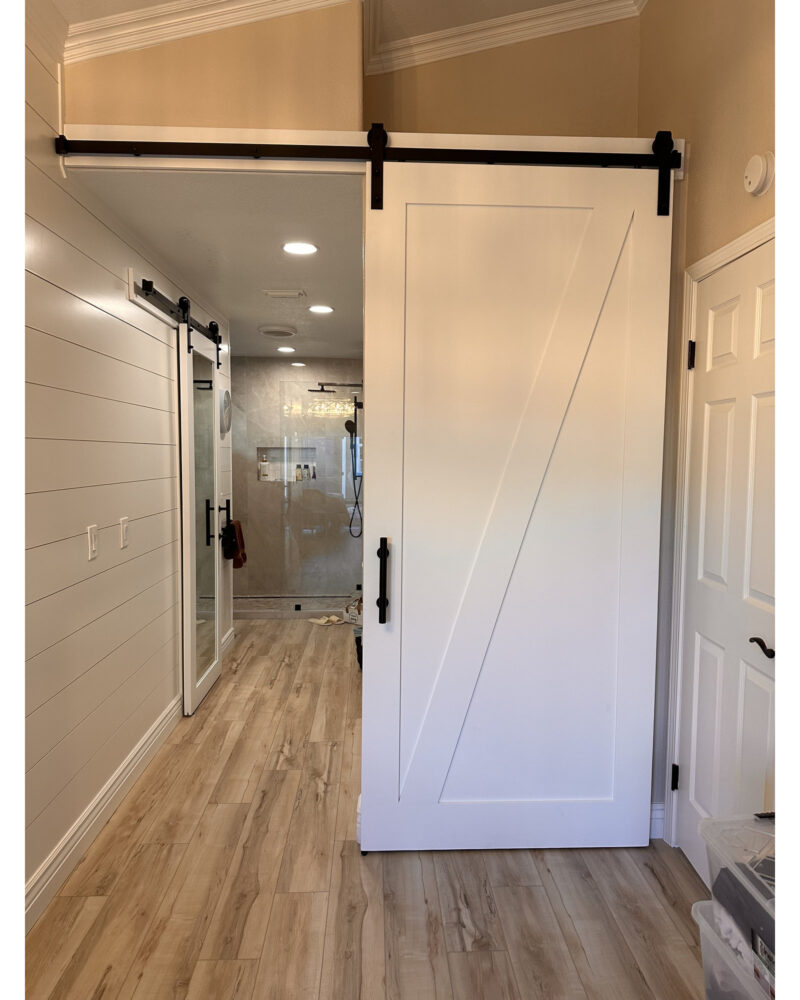
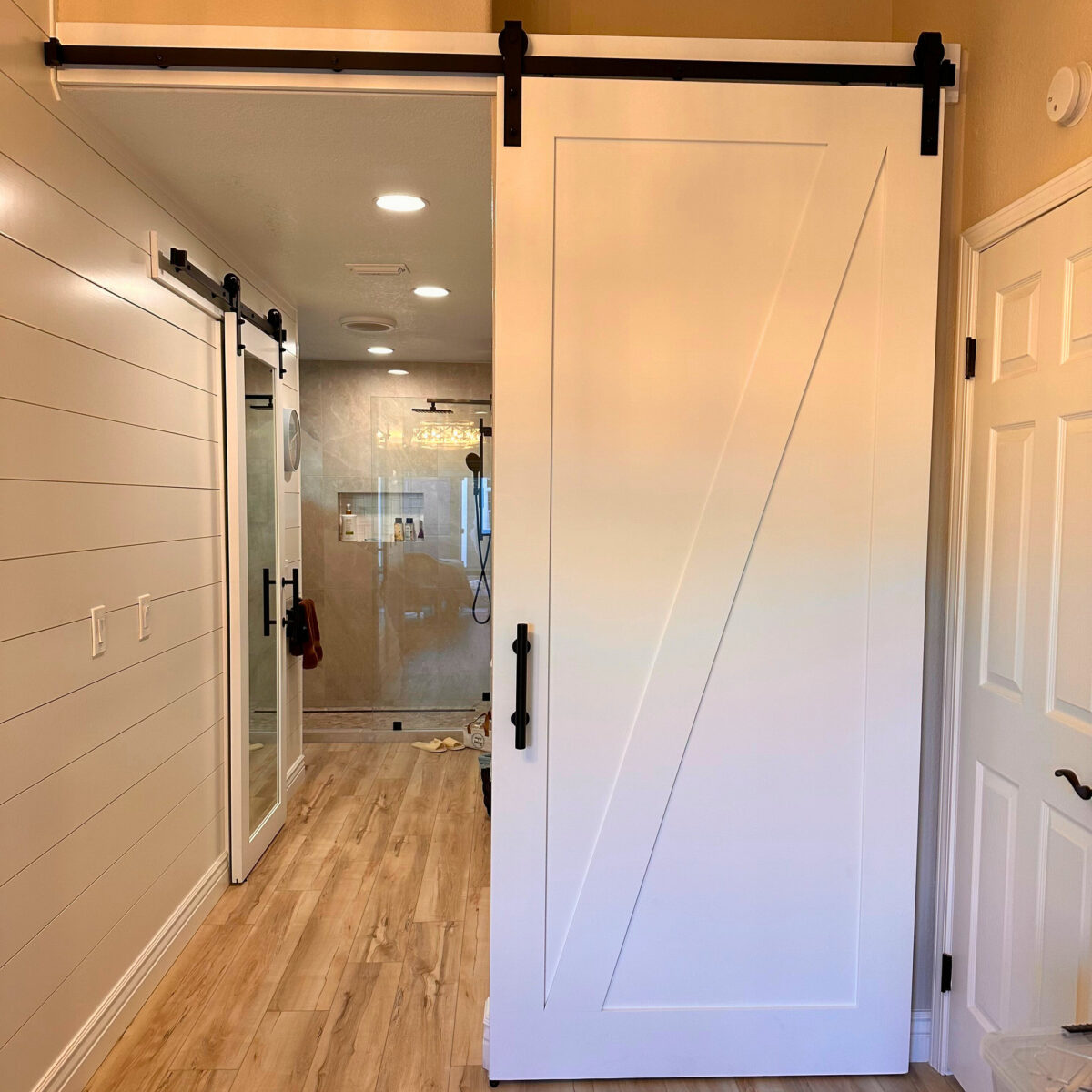
Modern Brace Sliding Door
What’s Included In Our Door Packages?
- Fully assembled, handcrafted doors built to fit your opening perfectly
- Custom stained or professionally painted to your exact color code
- Matching header board included for easy track installation
- Premium, top-quality track hardware included
- Freight shipping or local delivery available
- Dedicated customer support via call, text, or video
- Lifetime anti-warping guarantee
Fast response. No pressure. We’ll guide you.
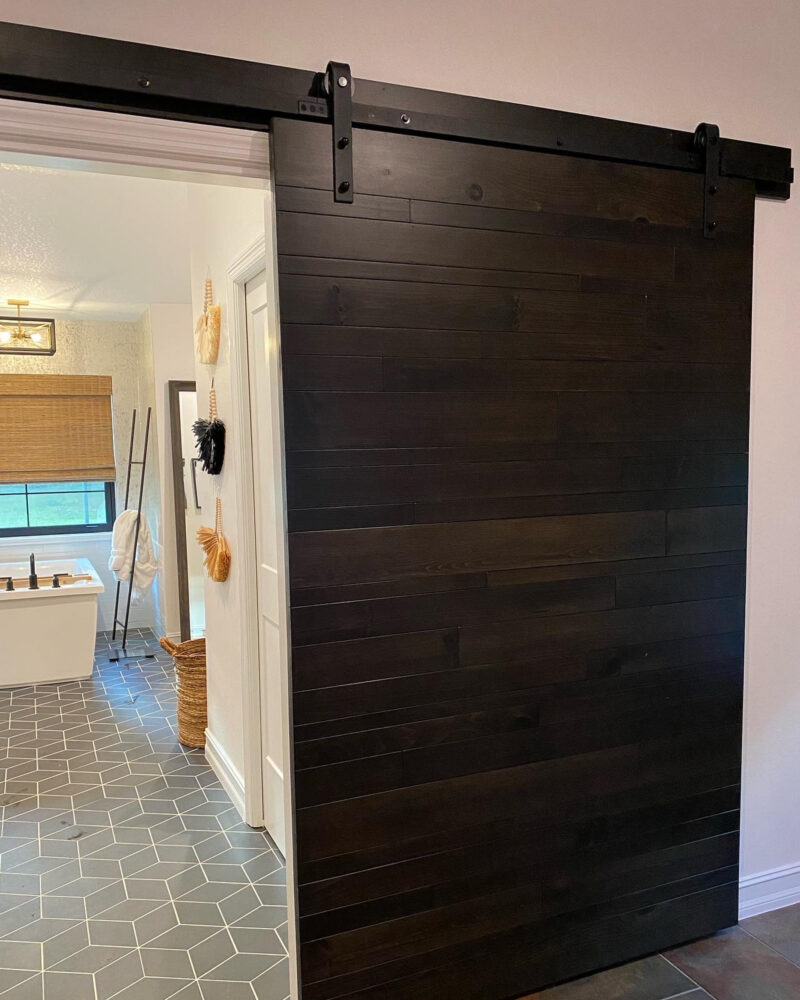
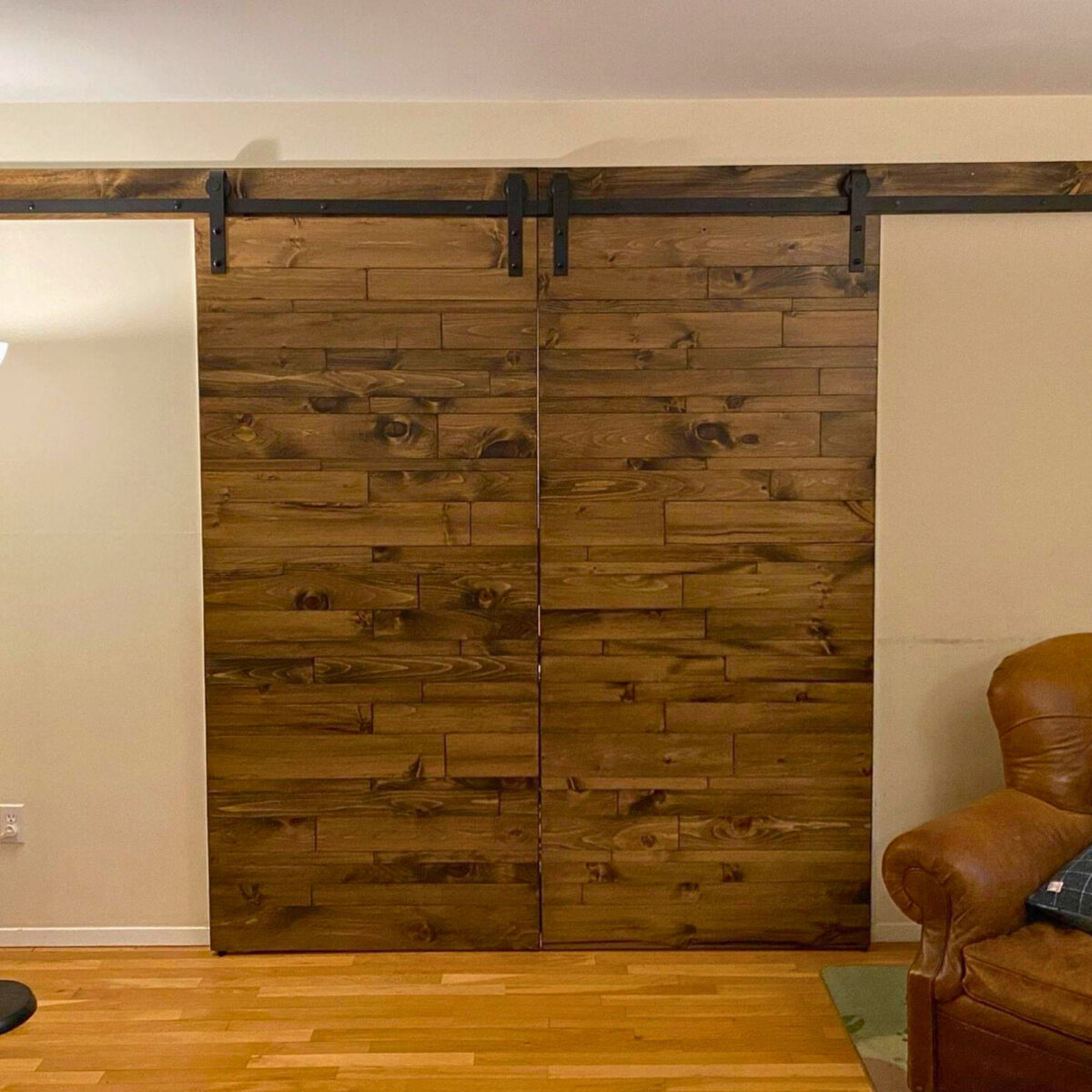
Industrial Slat Solid Wood Door
What’s Included In Our Door Packages?
- Fully assembled, handcrafted doors built to fit your opening perfectly
- Custom stained or professionally painted to your exact color code
- Matching header board included for easy track installation
- Premium, top-quality track hardware included
- Freight shipping or local delivery available
- Dedicated customer support via call, text, or video
- Lifetime anti-warping guarantee
Fast response. No pressure. We’ll guide you.
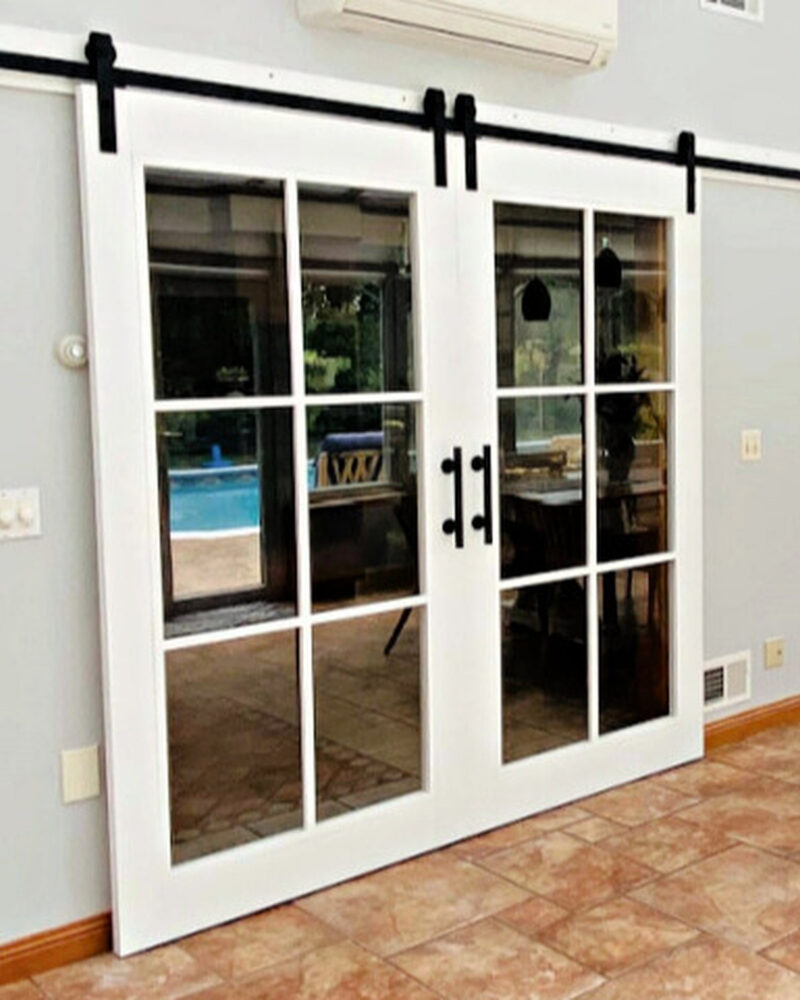
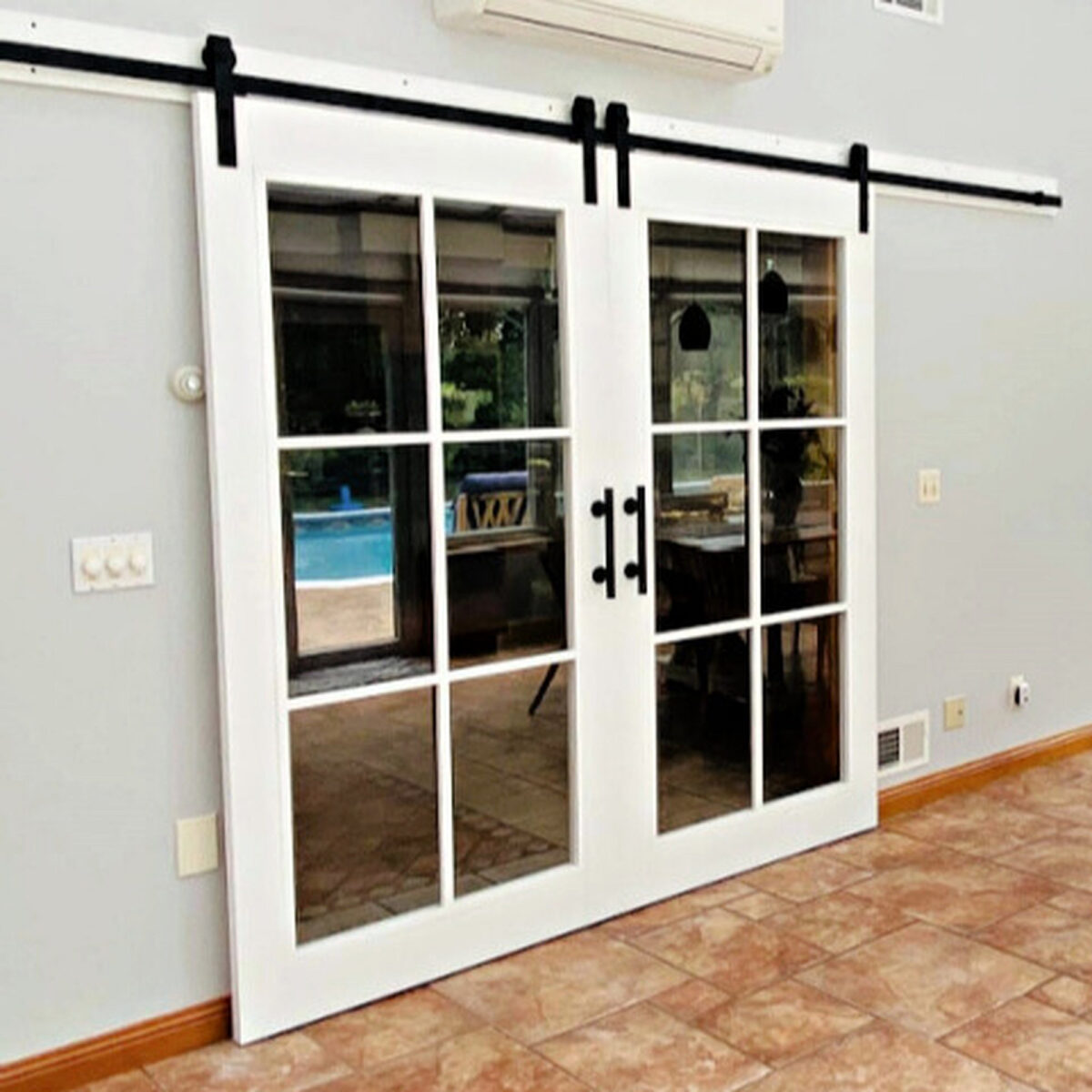
Modern French Sliding Door
What’s Included In Our Door Packages?
- Fully assembled, handcrafted doors built to fit your opening perfectly
- Custom stained or professionally painted to your exact color code
- Matching header board included for easy track installation
- Premium, top-quality track hardware included
- Freight shipping or local delivery available
- Dedicated customer support via call, text, or video
- Lifetime anti-warping guarantee
Fast response. No pressure. We’ll guide you.
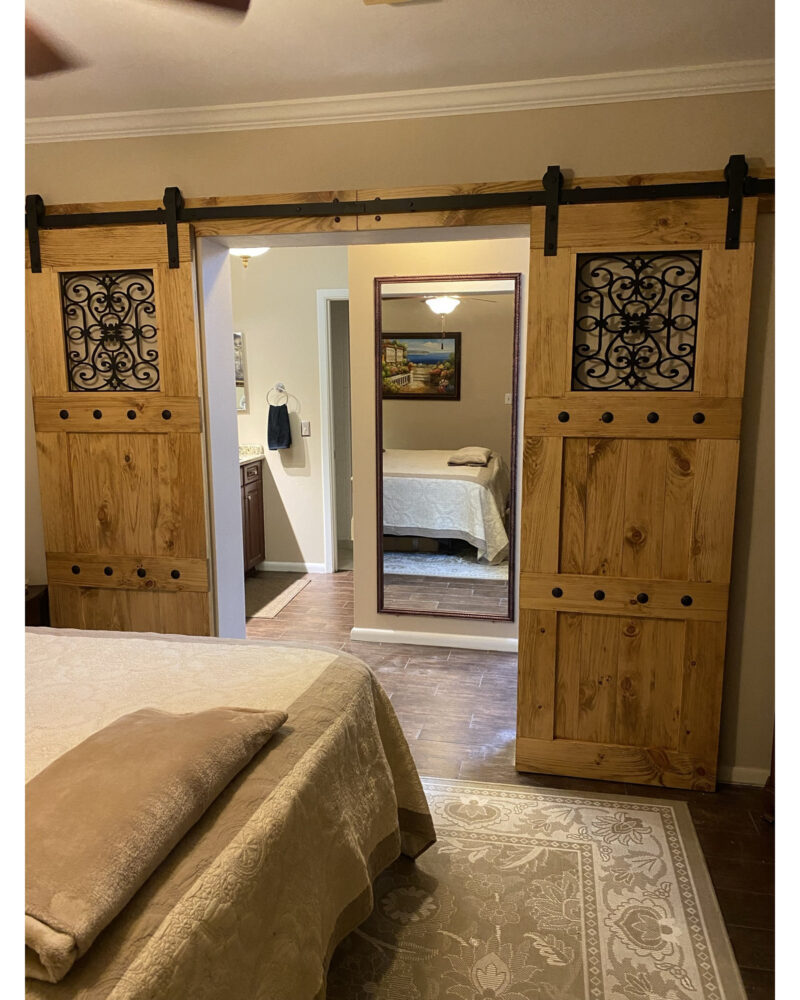
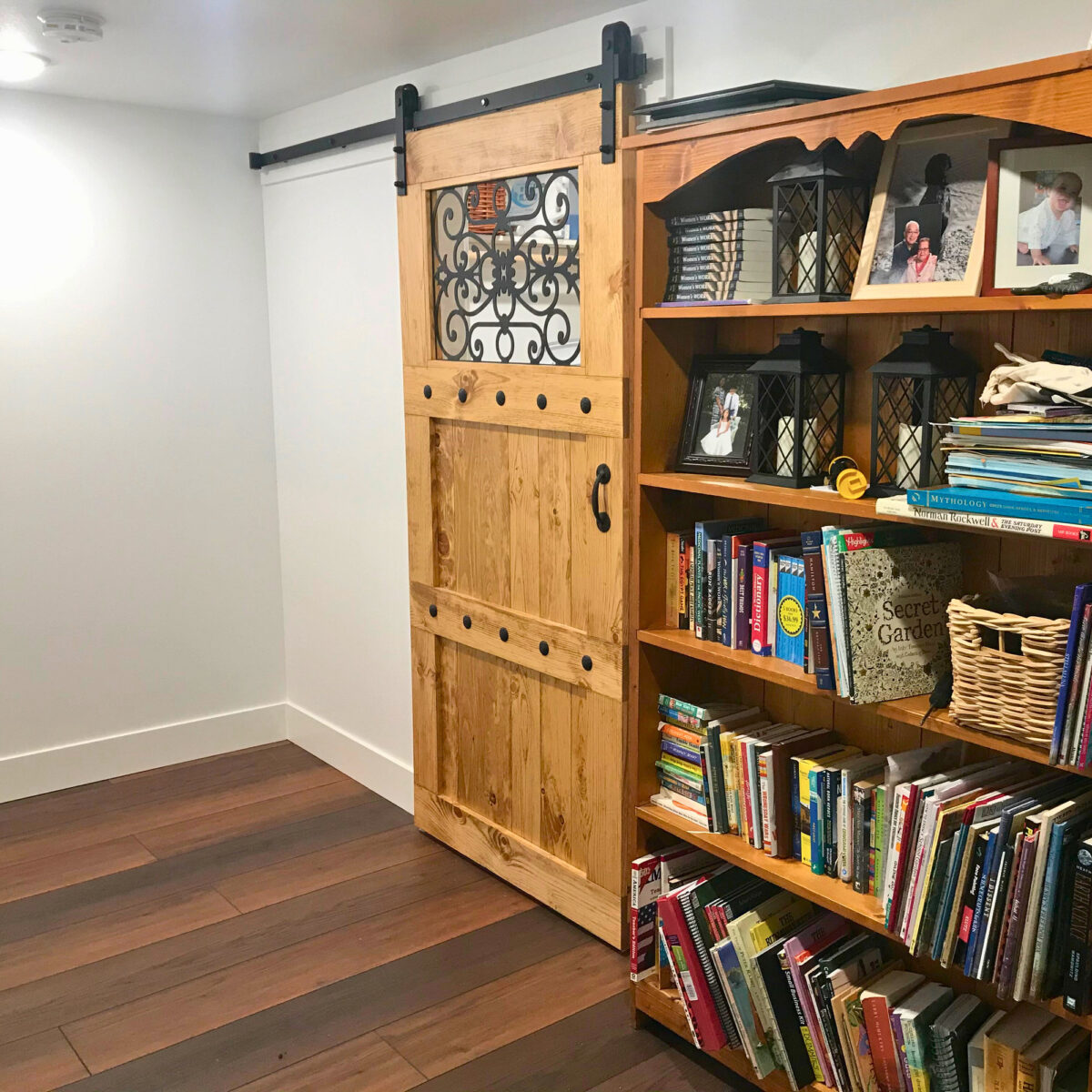
Fairtytale Scroll Sliding Door
What’s Included In Our Door Packages?
- Fully assembled, handcrafted doors built to fit your opening perfectly
- Custom stained or professionally painted to your exact color code
- Matching header board included for easy track installation
- Premium, top-quality track hardware included
- Freight shipping or local delivery available
- Dedicated customer support via call, text, or video
- Lifetime anti-warping guarantee
Fast response. No pressure. We’ll guide you.
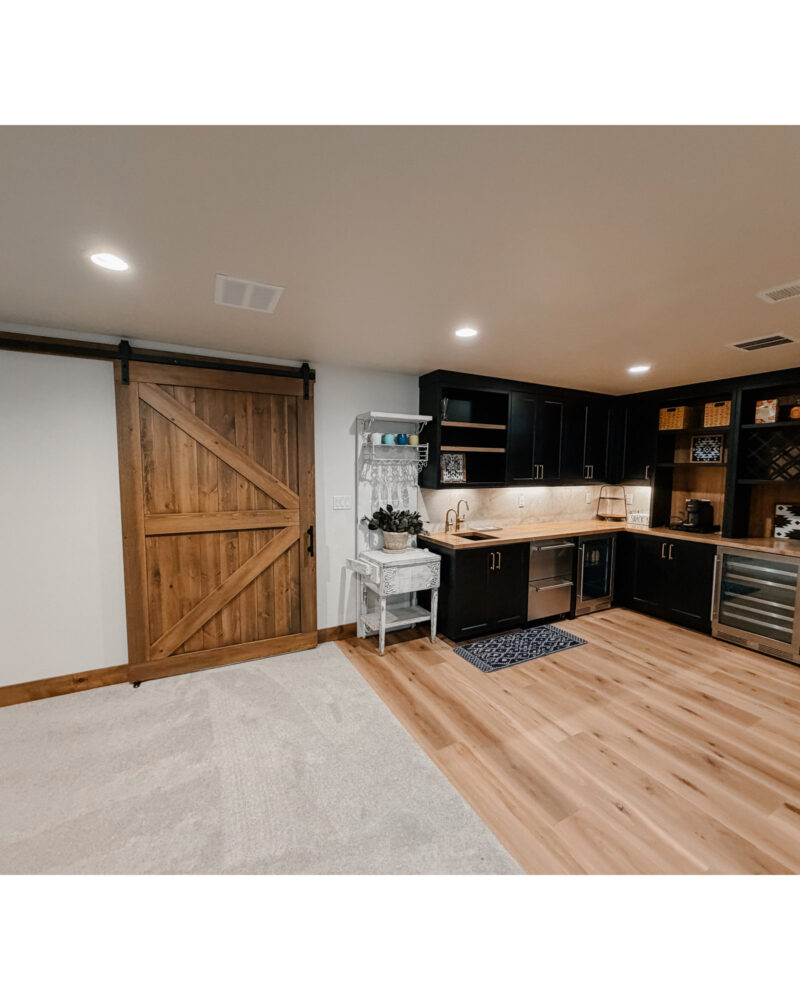
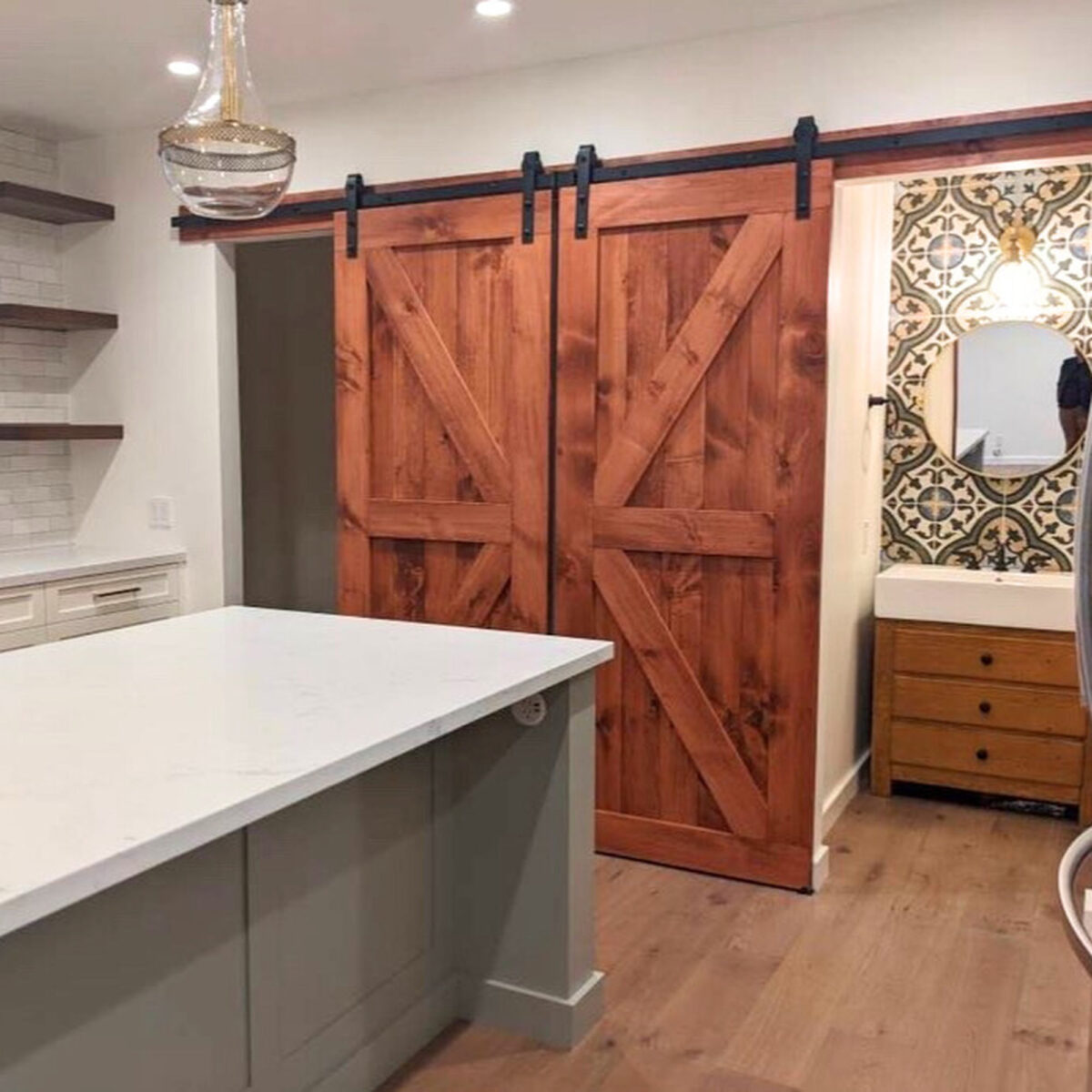
British Brace Solid Wood Door
What’s Included In Our Door Packages?
- Fully assembled, handcrafted doors built to fit your opening perfectly
- Custom stained or professionally painted to your exact color code
- Matching header board included for easy track installation
- Premium, top-quality track hardware included
- Freight shipping or local delivery available
- Dedicated customer support via call, text, or video
- Lifetime anti-warping guarantee
Fast response. No pressure. We’ll guide you.
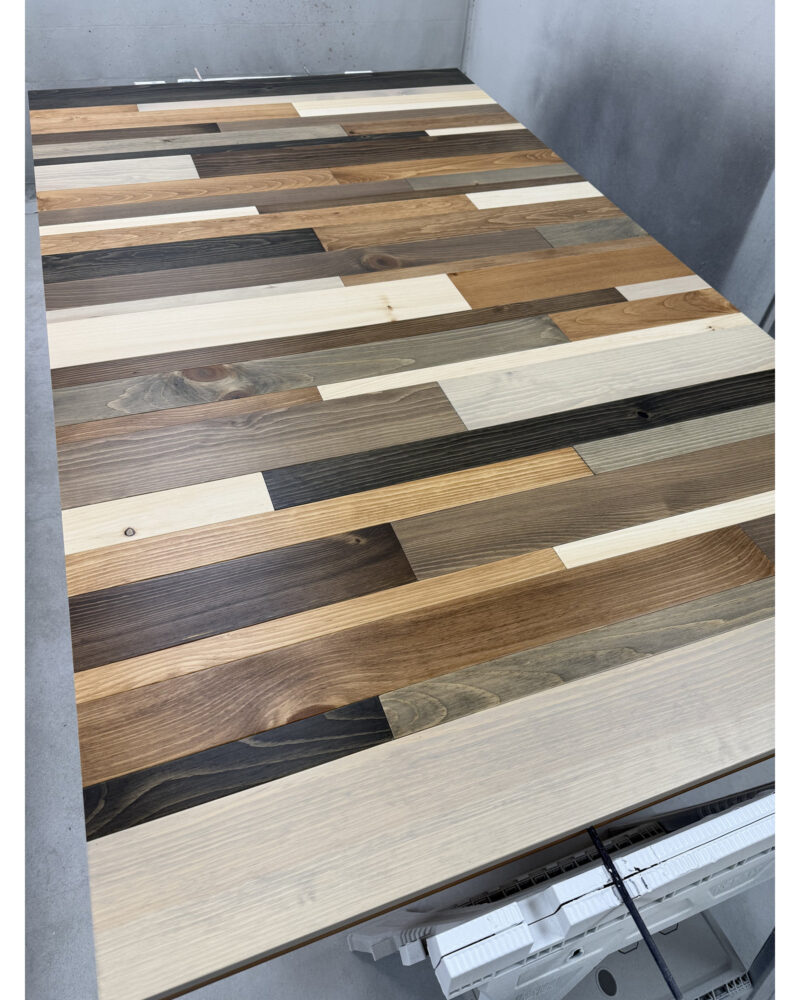
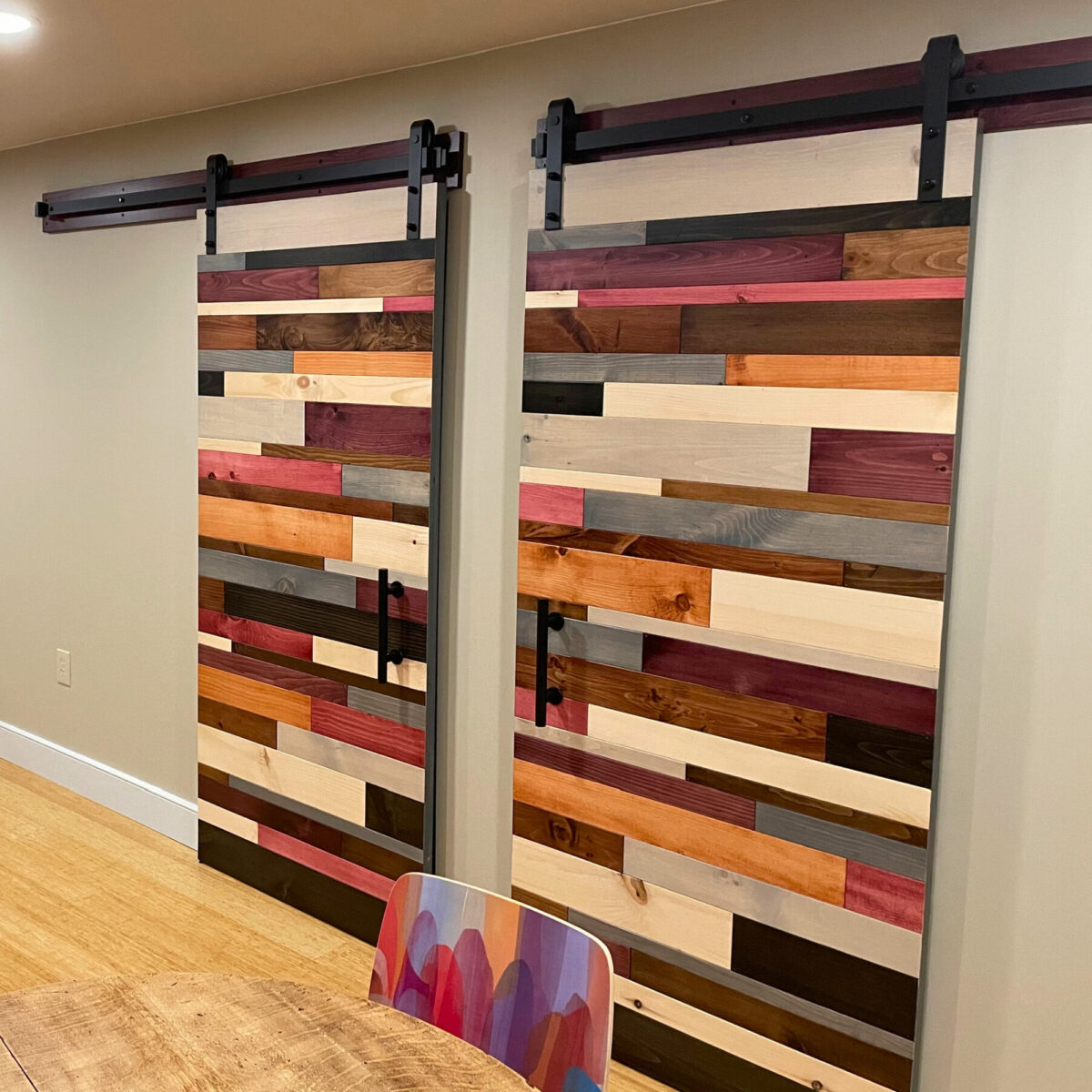
Horizontal Palette Solid Wood Door
What’s Included In Our Door Packages?
- Fully assembled, handcrafted doors built to fit your opening perfectly
- Custom stained or professionally painted to your exact color code
- Matching header board included for easy track installation
- Premium, top-quality track hardware included
- Freight shipping or local delivery available
- Dedicated customer support via call, text, or video
- Lifetime anti-warping guarantee
Fast response. No pressure. We’ll guide you.
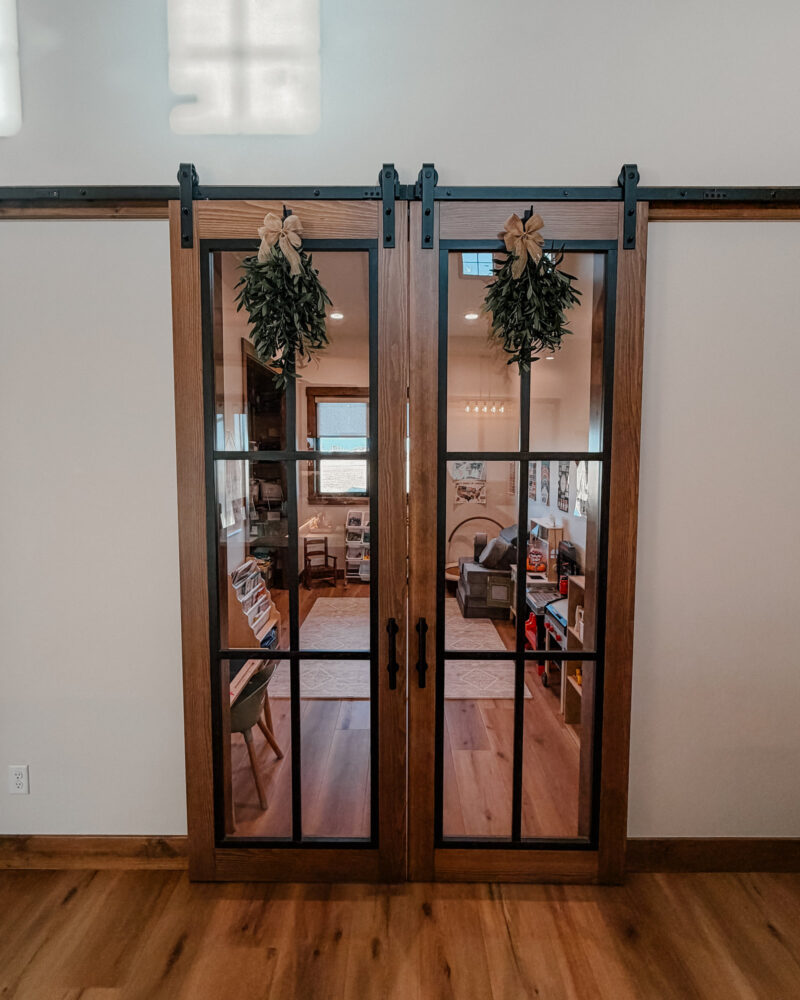
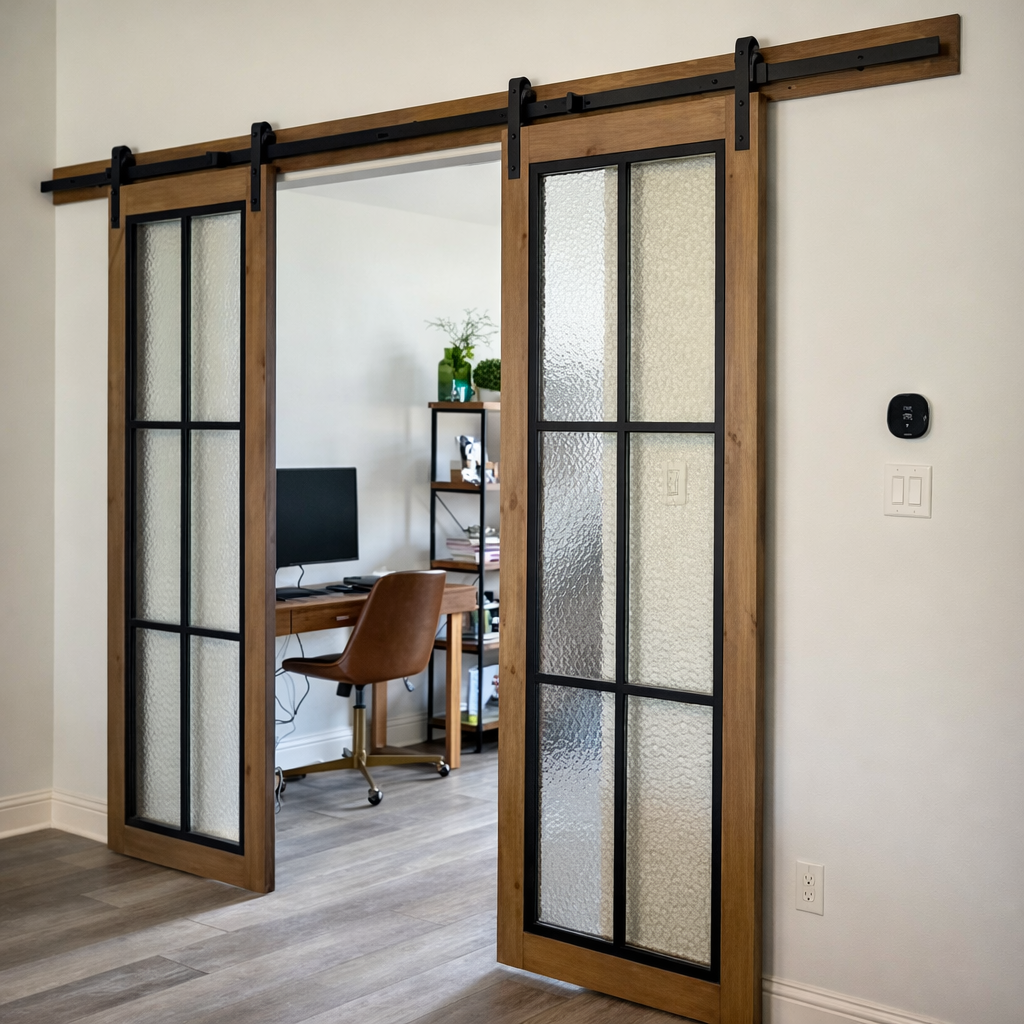
Classic French Sliding Door
What’s Included In Our Door Packages?
- Fully assembled, handcrafted doors built to fit your opening perfectly
- Custom stained or professionally painted to your exact color code
- Matching header board included for easy track installation
- Premium, top-quality track hardware included
- Freight shipping or local delivery available
- Dedicated customer support via call, text, or video
- Lifetime anti-warping guarantee
Fast response. No pressure. We’ll guide you.
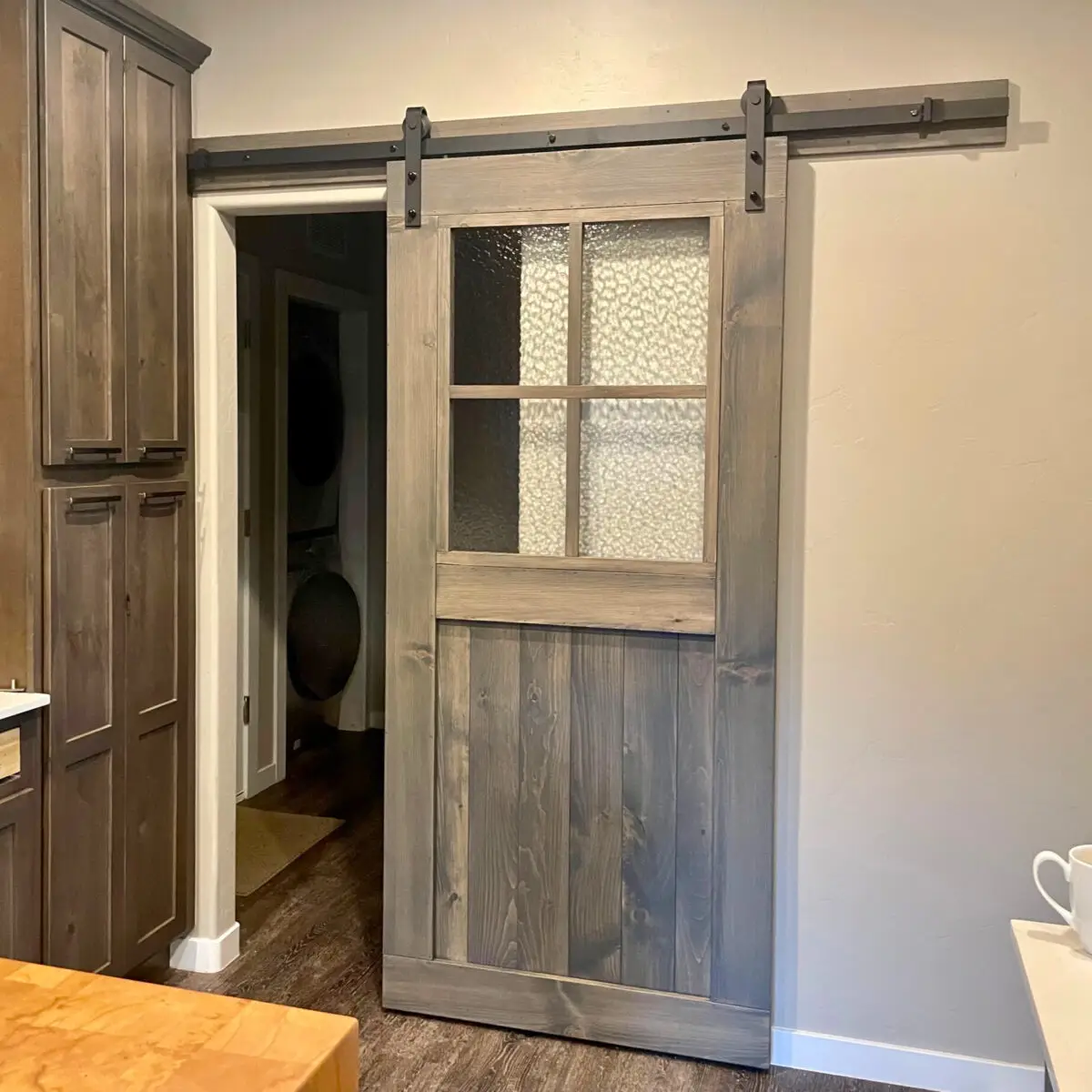
1/2 French Prairie Sliding Door
What’s Included In Our Door Packages?
- Fully assembled, handcrafted doors built to fit your opening perfectly
- Custom stained or professionally painted to your exact color code
- Matching header board included for easy track installation
- Premium, top-quality track hardware included
- Freight shipping or local delivery available
- Dedicated customer support via call, text, or video
- Lifetime anti-warping guarantee
Fast response. No pressure. We’ll guide you.
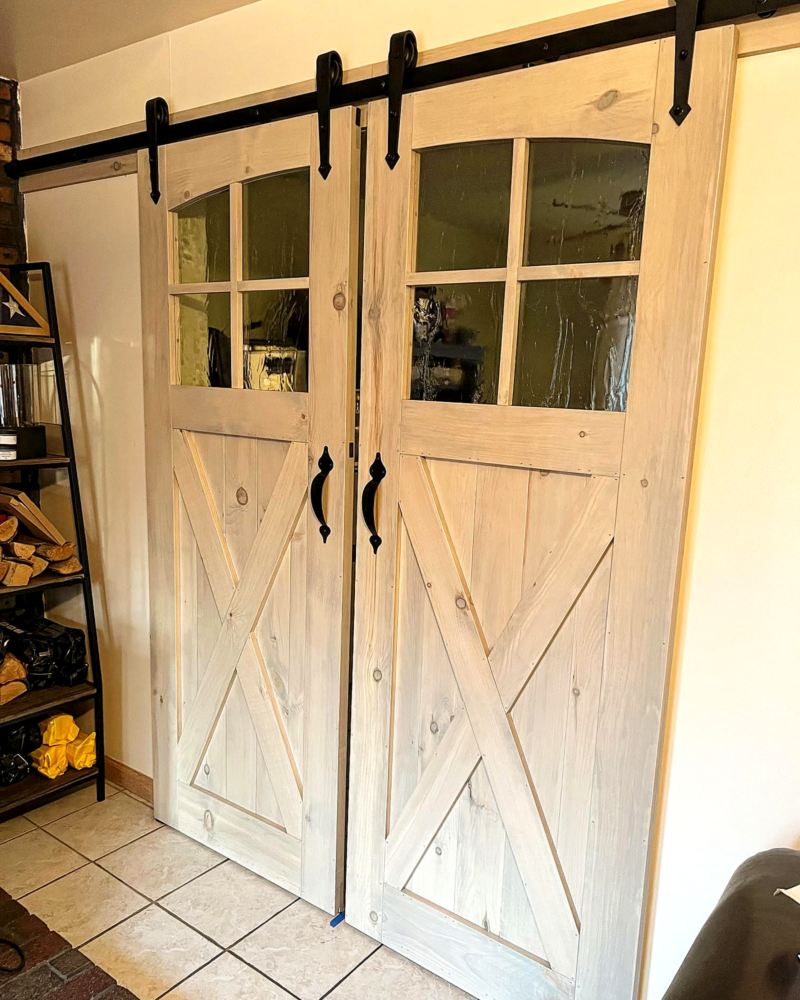
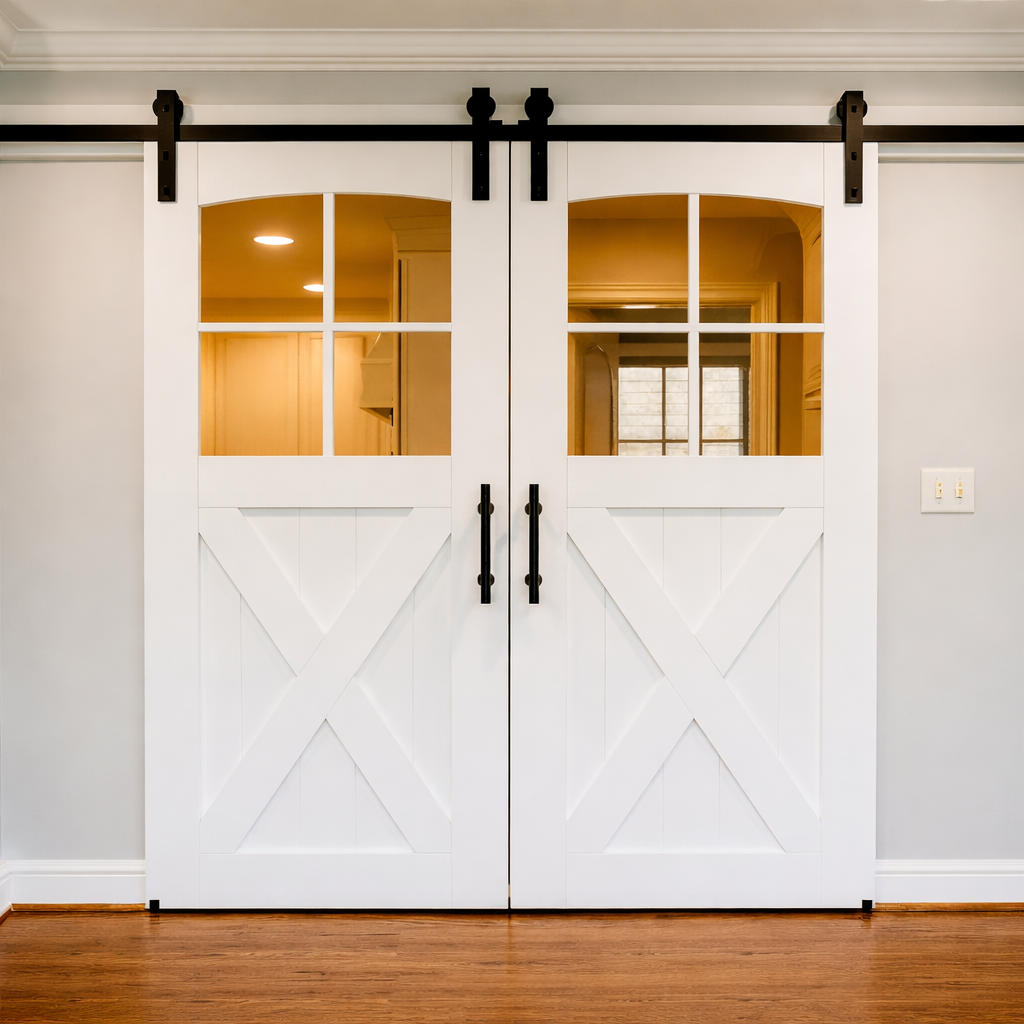
Arched Glass Sliding Door
What’s Included In Our Door Packages?
- Fully assembled, handcrafted doors built to fit your opening perfectly
- Custom stained or professionally painted to your exact color code
- Matching header board included for easy track installation
- Premium, top-quality track hardware included
- Freight shipping or local delivery available
- Dedicated customer support via call, text, or video
- Lifetime anti-warping guarantee
Fast response. No pressure. We’ll guide you.
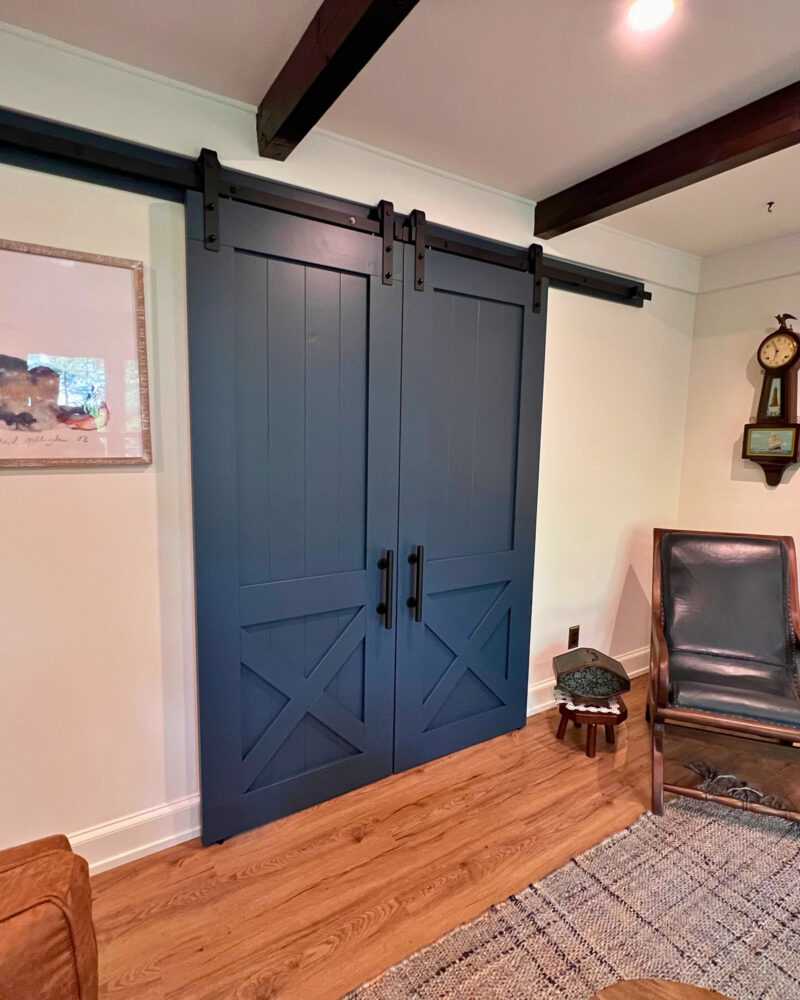
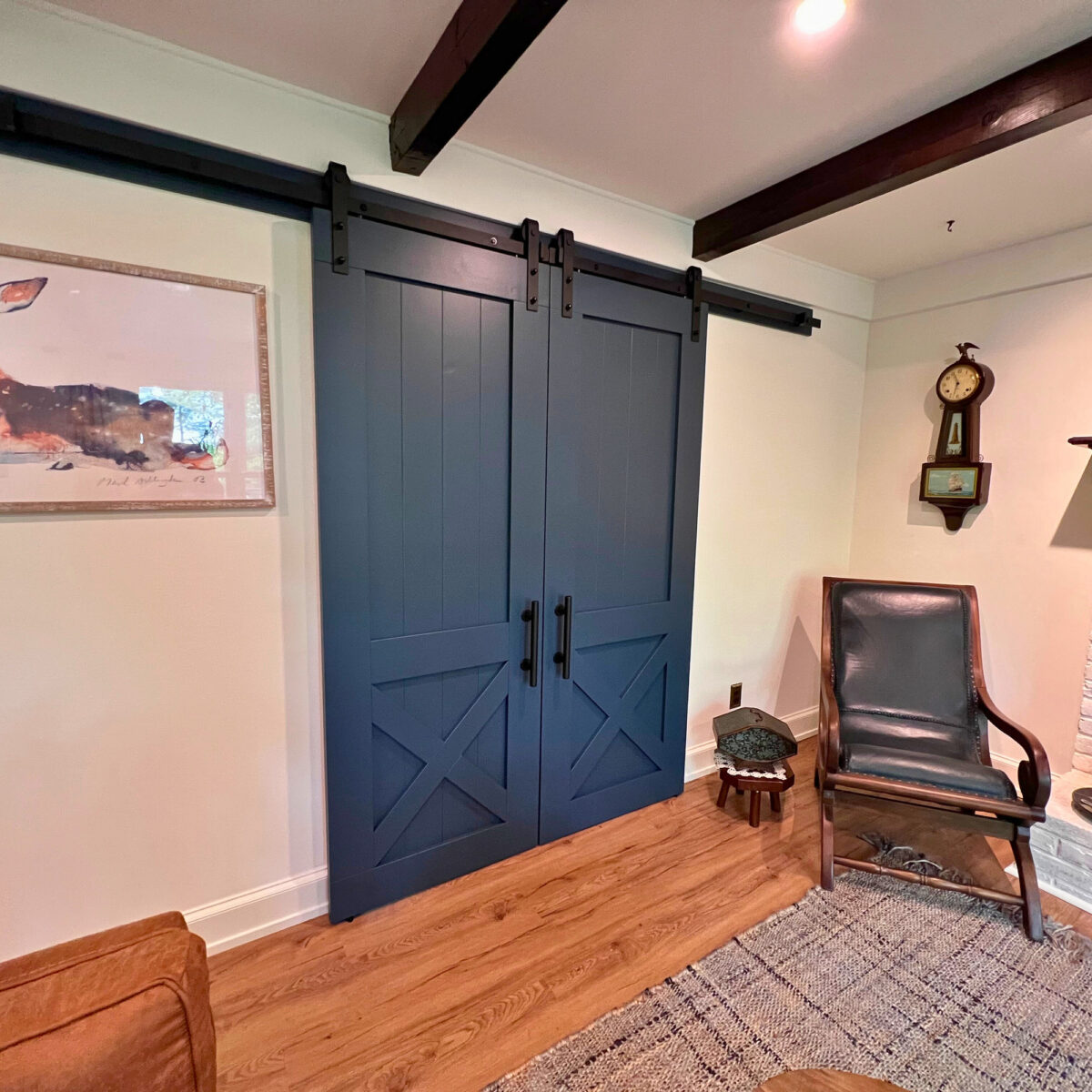
Classic Farmhouse Solid Wood Door
What’s Included In Our Door Packages?
- Fully assembled, handcrafted doors built to fit your opening perfectly
- Custom stained or professionally painted to your exact color code
- Matching header board included for easy track installation
- Premium, top-quality track hardware included
- Freight shipping or local delivery available
- Dedicated customer support via call, text, or video
- Lifetime anti-warping guarantee
Fast response. No pressure. We’ll guide you.
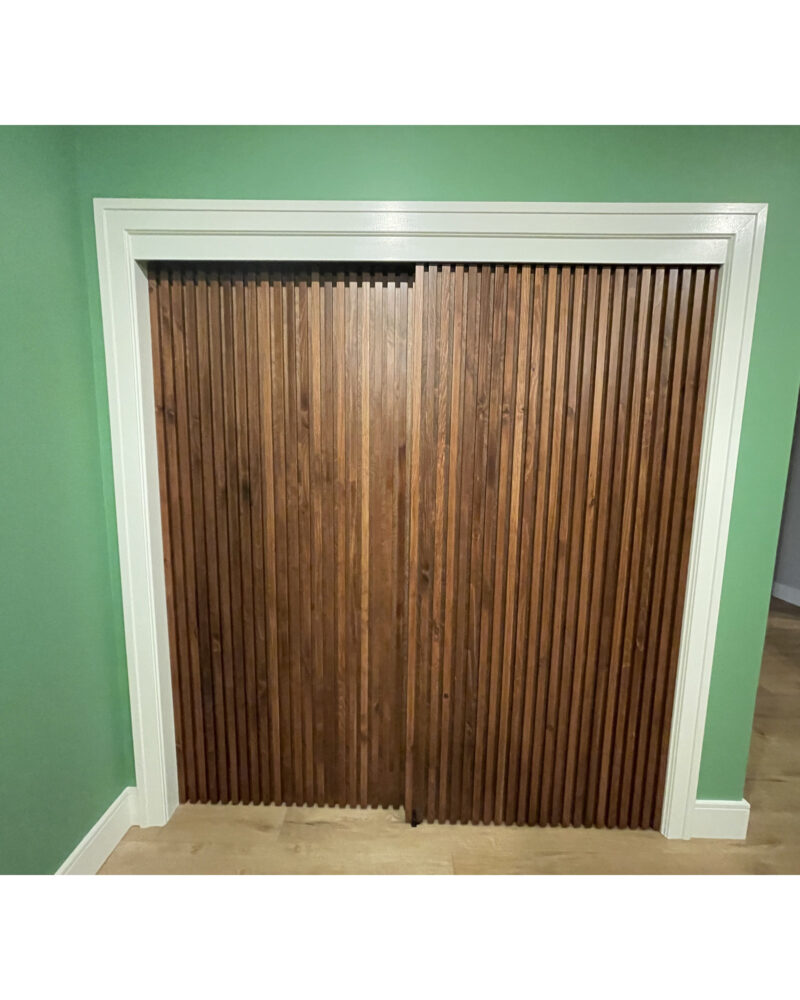
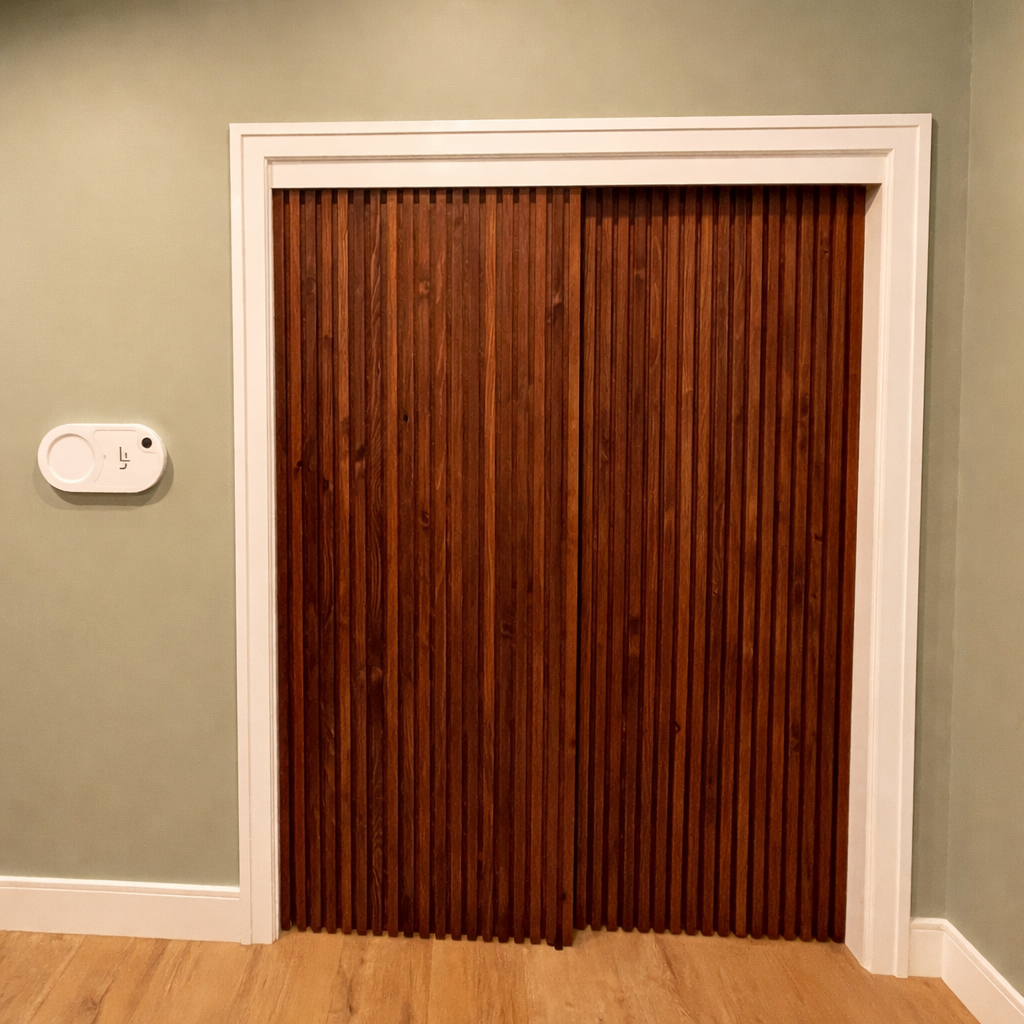
Fluted Bypass Sliding Door
What’s Included In Our Door Packages?
- Fully assembled, handcrafted doors built to fit your opening perfectly
- Custom stained or professionally painted to your exact color code
- Matching header board included for easy track installation
- Premium, top-quality track hardware included
- Freight shipping or local delivery available
- Dedicated customer support via call, text, or video
- Lifetime anti-warping guarantee
Fast response. No pressure. We’ll guide you.
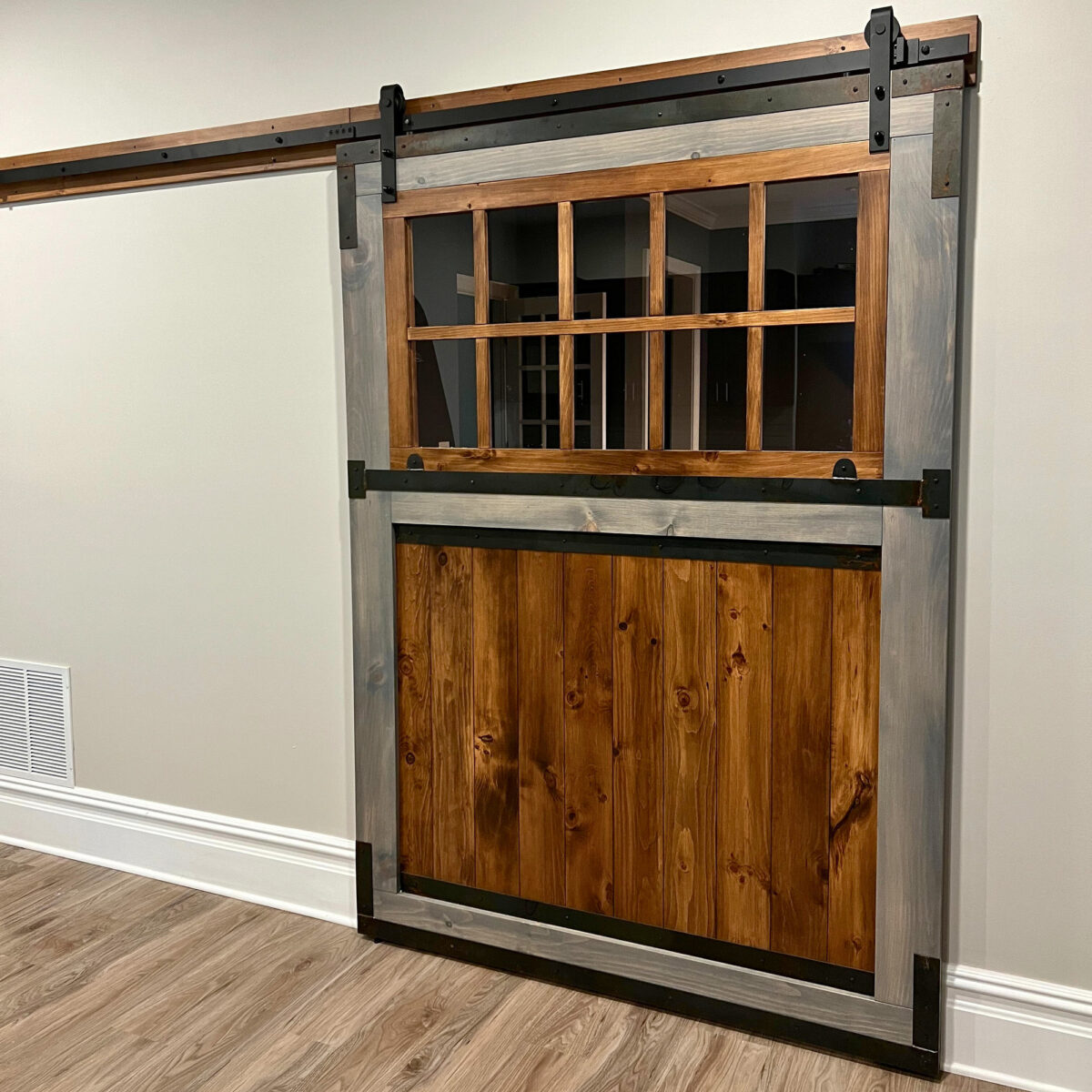
Modern Industrial Sliding Door
What’s Included In Our Door Packages?
- Fully assembled, handcrafted doors built to fit your opening perfectly
- Custom stained or professionally painted to your exact color code
- Matching header board included for easy track installation
- Premium, top-quality track hardware included
- Freight shipping or local delivery available
- Dedicated customer support via call, text, or video
- Lifetime anti-warping guarantee
Fast response. No pressure. We’ll guide you.
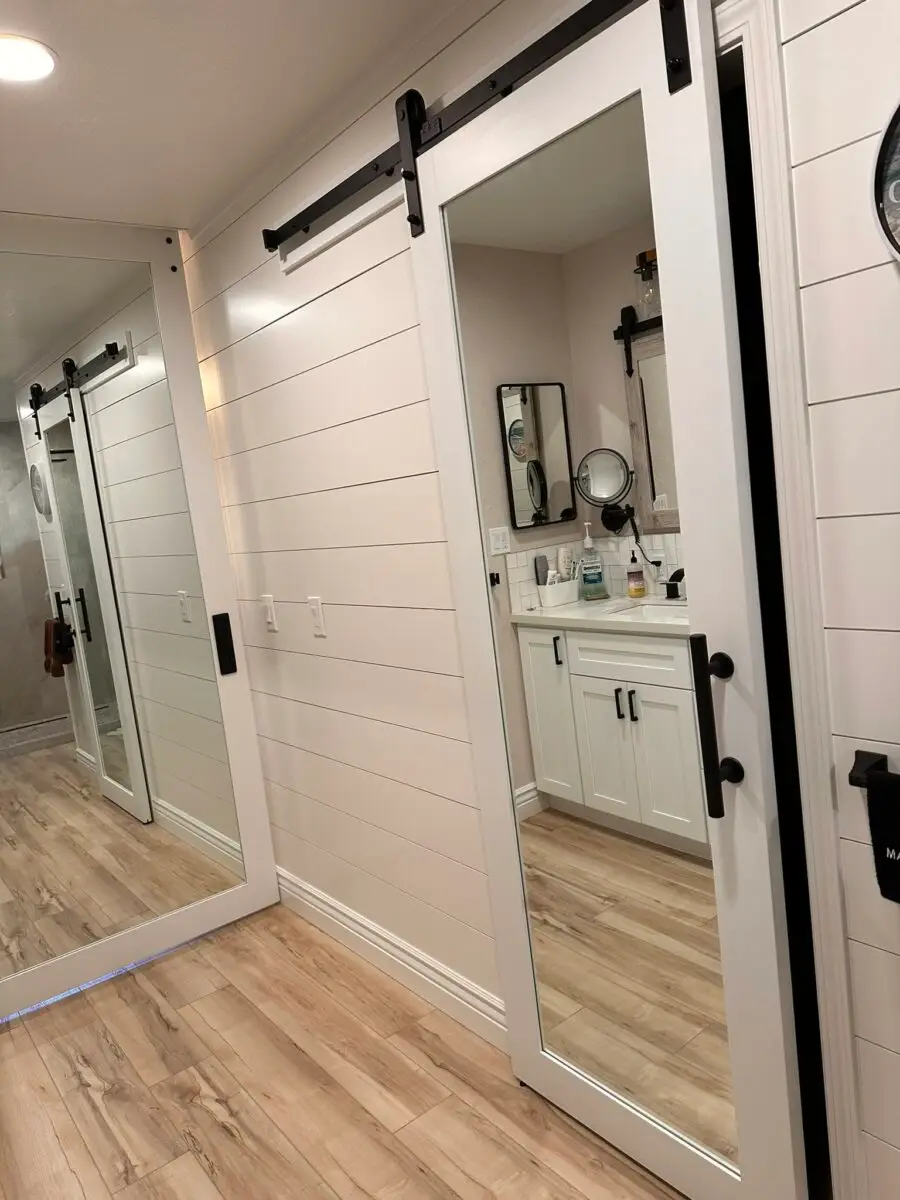
Midmod Mirror Sliding Door
What’s Included In Our Door Packages?
- Fully assembled, handcrafted doors built to fit your opening perfectly
- Custom stained or professionally painted to your exact color code
- Matching header board included for easy track installation
- Premium, top-quality track hardware included
- Freight shipping or local delivery available
- Dedicated customer support via call, text, or video
- Lifetime anti-warping guarantee
Fast response. No pressure. We’ll guide you.
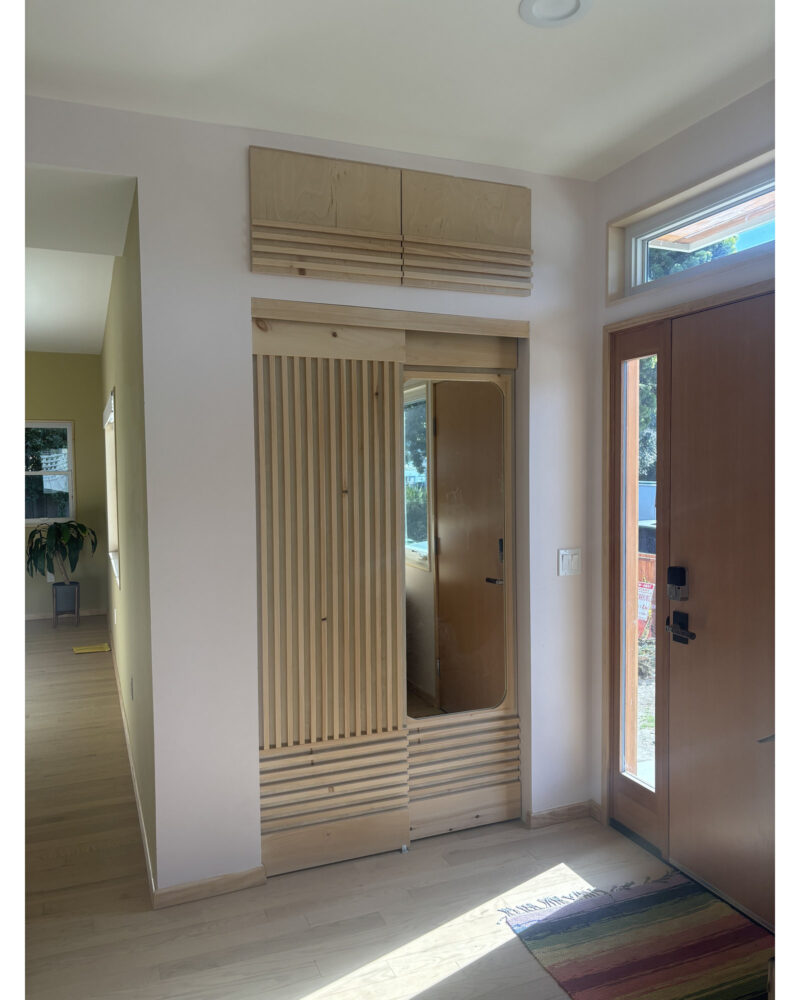
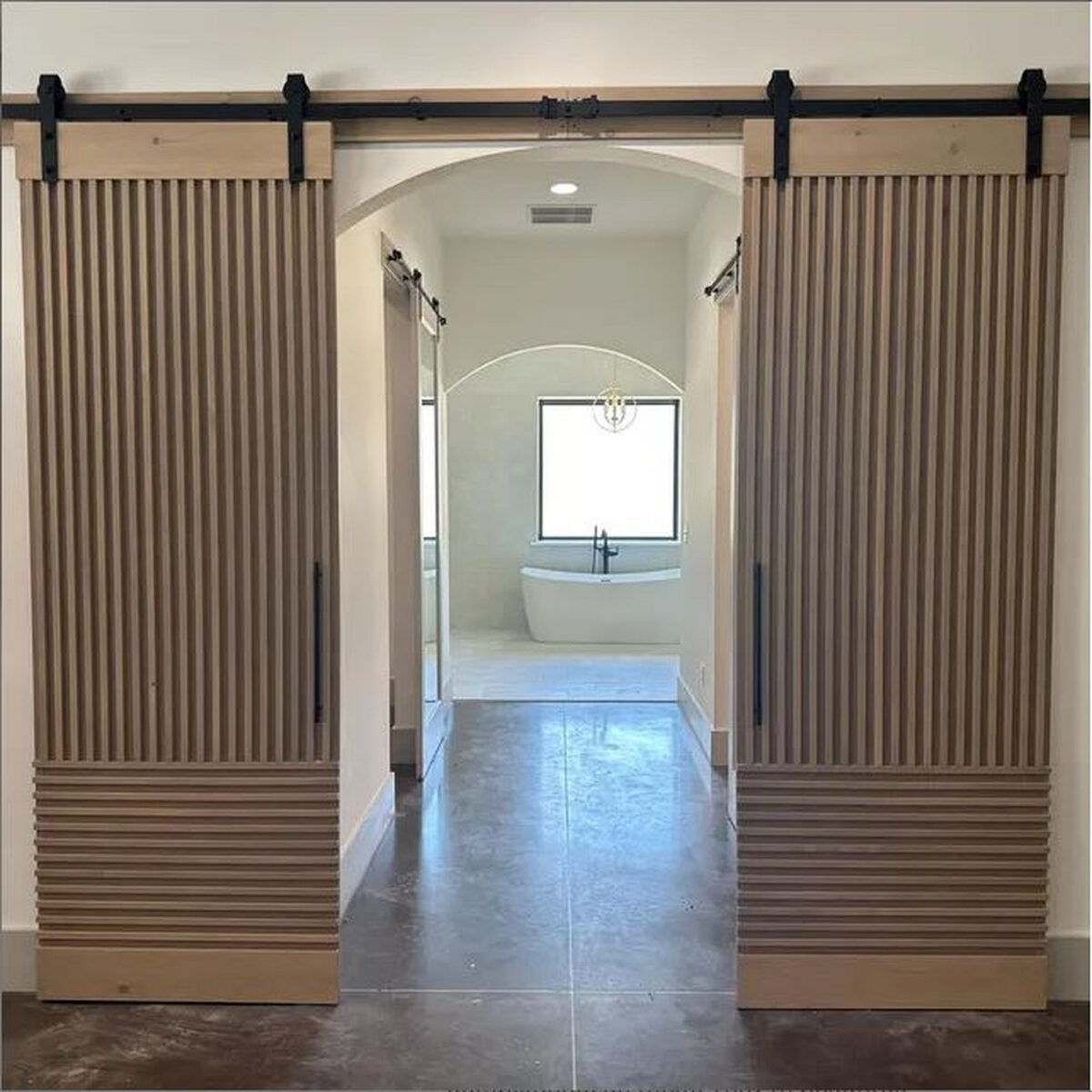
Modern Ribbed Sliding Door
What’s Included In Our Door Packages?
- Fully assembled, handcrafted doors built to fit your opening perfectly
- Custom stained or professionally painted to your exact color code
- Matching header board included for easy track installation
- Premium, top-quality track hardware included
- Freight shipping or local delivery available
- Dedicated customer support via call, text, or video
- Lifetime anti-warping guarantee
Fast response. No pressure. We’ll guide you.
recent view product
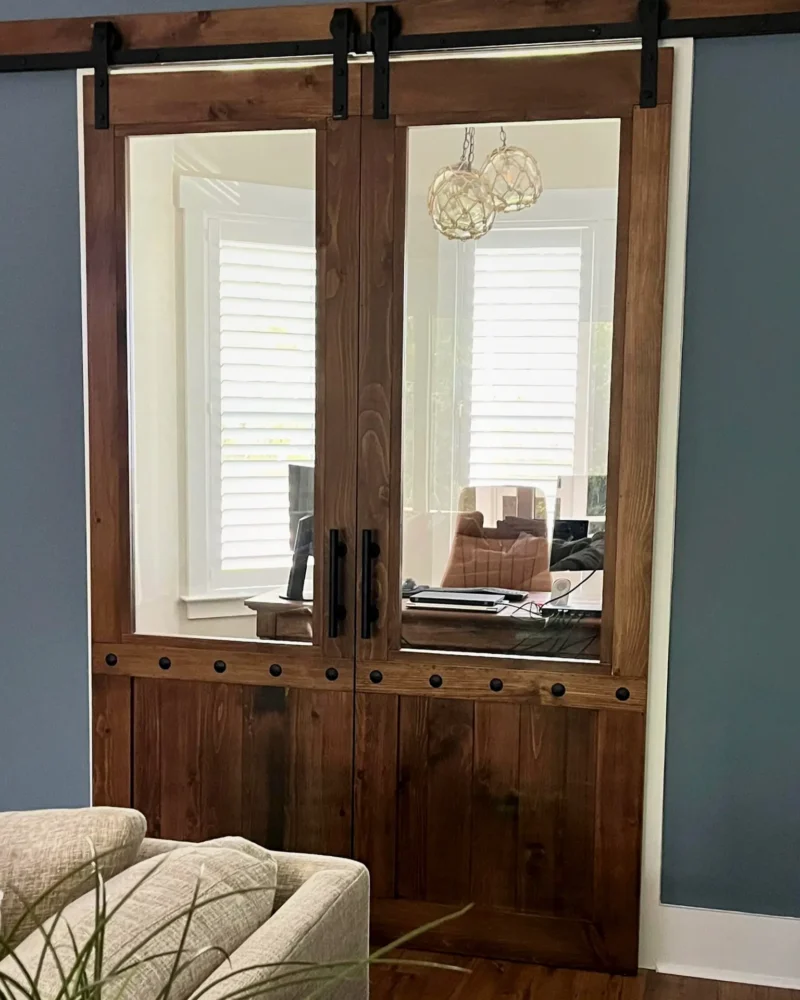
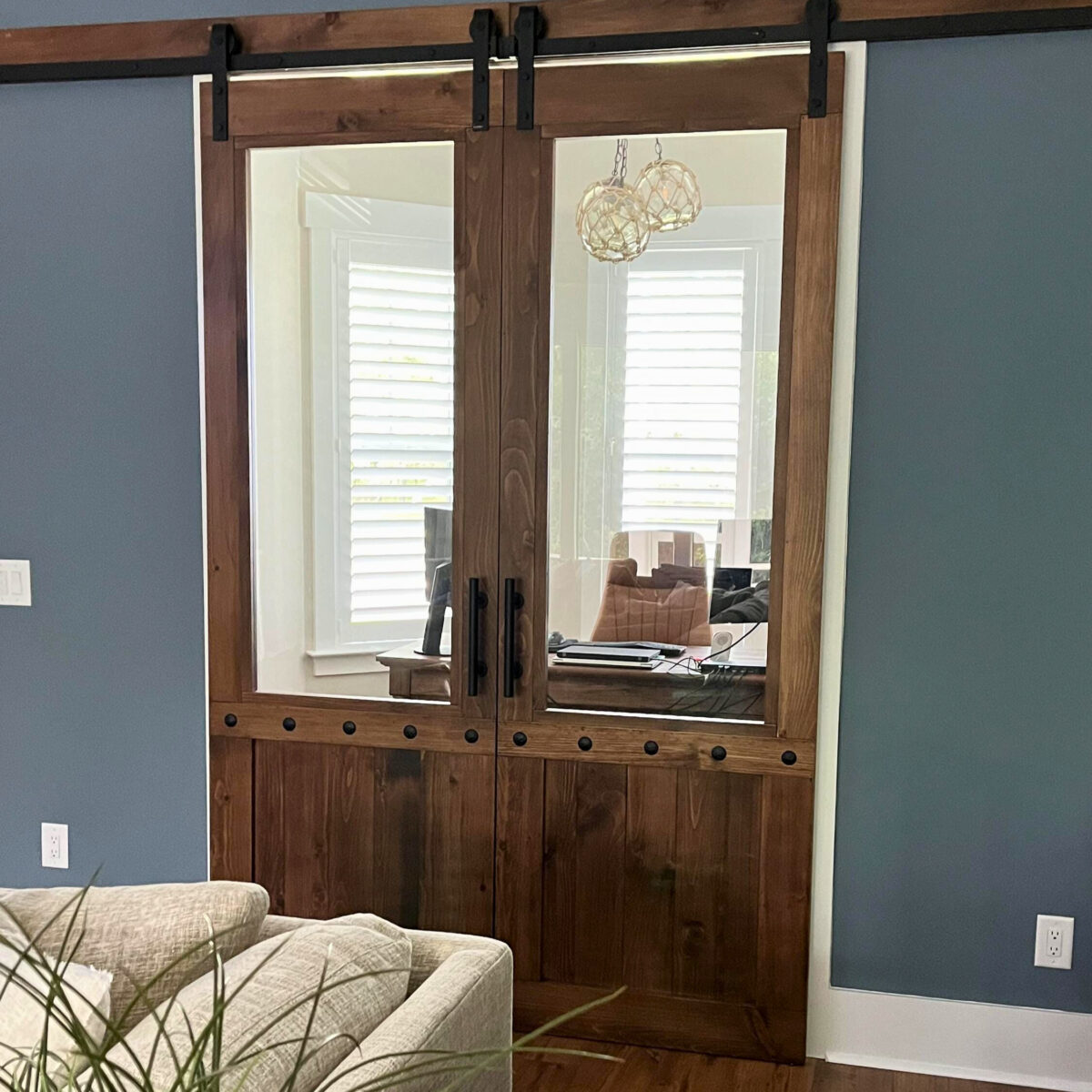
2/3 French Prairie Sliding Door
What’s Included In Our Door Packages?
- Fully assembled, handcrafted doors built to fit your opening perfectly
- Custom stained or professionally painted to your exact color code
- Matching header board included for easy track installation
- Premium, top-quality track hardware included
- Freight shipping or local delivery available
- Dedicated customer support via call, text, or video
- Lifetime anti-warping guarantee
Fast response. No pressure. We’ll guide you.
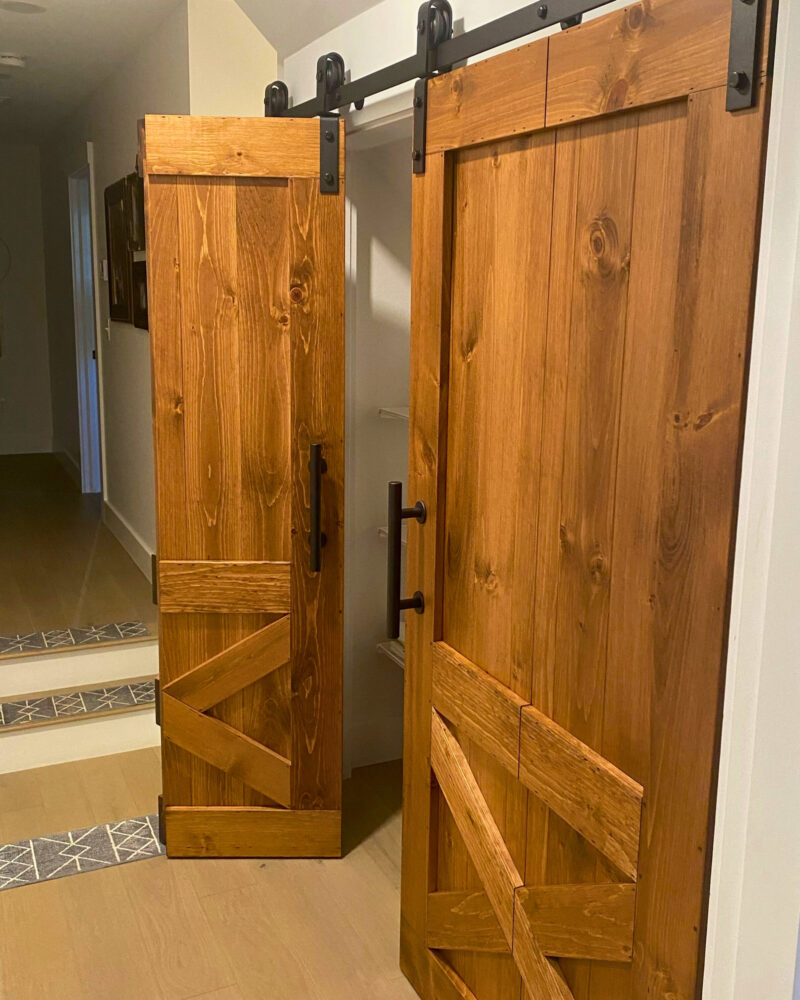
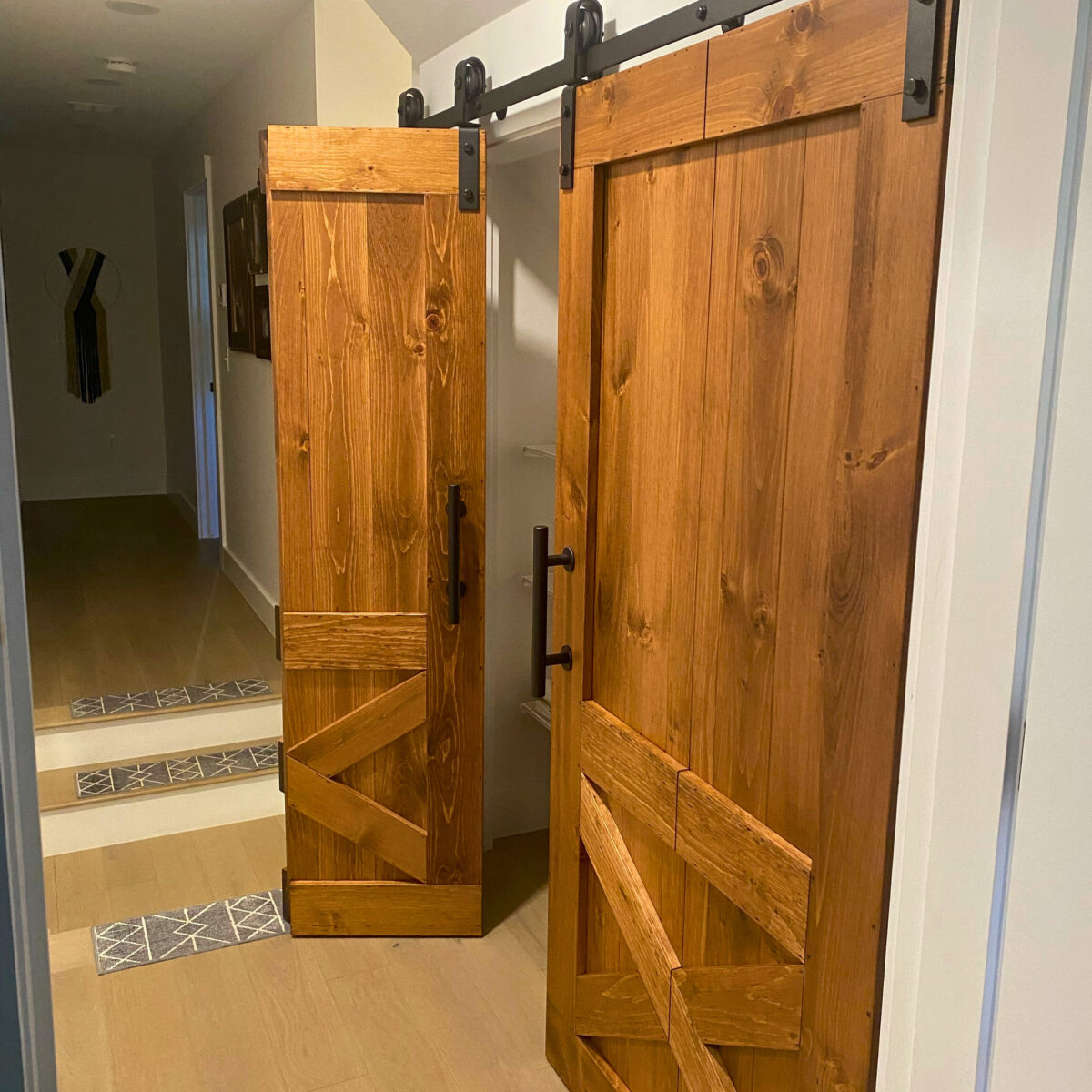
Bifold Farmhouse Sliding Door
What’s Included In Our Door Packages?
- Fully assembled, handcrafted doors built to fit your opening perfectly
- Custom stained or professionally painted to your exact color code
- Matching header board included for easy track installation
- Premium, top-quality track hardware included
- Freight shipping or local delivery available
- Dedicated customer support via call, text, or video
- Lifetime anti-warping guarantee
Fast response. No pressure. We’ll guide you.
Fairtytale Scroll Sliding Door
What’s Included In Our Door Packages?
- Fully assembled, handcrafted doors built to fit your opening perfectly
- Custom stained or professionally painted to your exact color code
- Matching header board included for easy track installation
- Premium, top-quality track hardware included
- Freight shipping or local delivery available
- Dedicated customer support via call, text, or video
- Lifetime anti-warping guarantee
Fast response. No pressure. We’ll guide you.
Classic Farmhouse Solid Wood Door
What’s Included In Our Door Packages?
- Fully assembled, handcrafted doors built to fit your opening perfectly
- Custom stained or professionally painted to your exact color code
- Matching header board included for easy track installation
- Premium, top-quality track hardware included
- Freight shipping or local delivery available
- Dedicated customer support via call, text, or video
- Lifetime anti-warping guarantee
Fast response. No pressure. We’ll guide you.
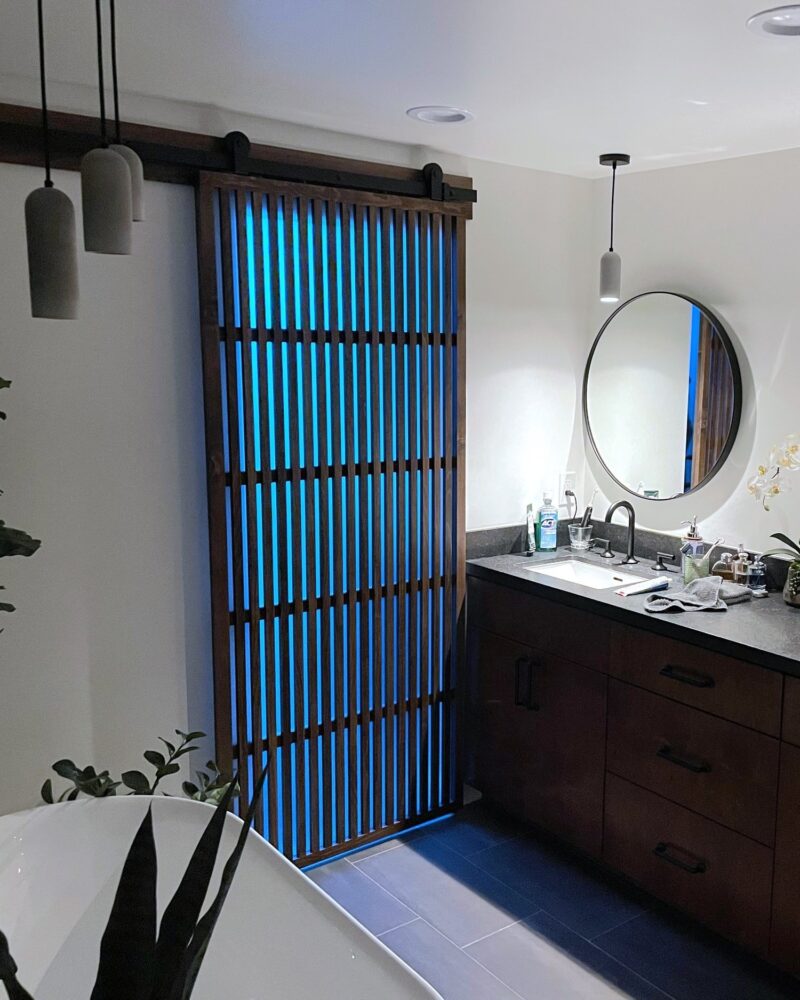
Japanese Slat Sliding Door
What’s Included In Our Door Packages?
- Fully assembled, handcrafted doors built to fit your opening perfectly
- Custom stained or professionally painted to your exact color code
- Matching header board included for easy track installation
- Premium, top-quality track hardware included
- Freight shipping or local delivery available
- Dedicated customer support via call, text, or video
- Lifetime anti-warping guarantee
Fast response. No pressure. We’ll guide you.